
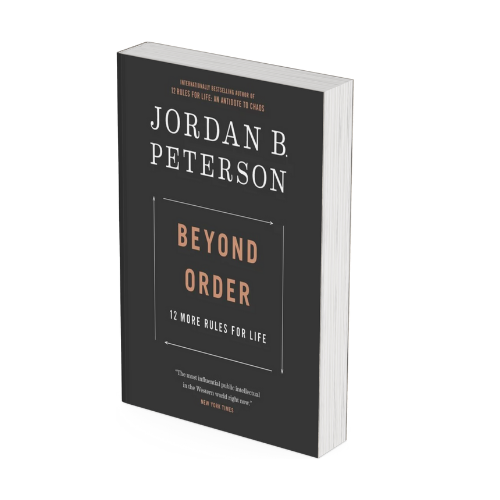
Beyond Order
by Jordan Peterson
As a Canadian clinical psychologist, lecturer and best-selling author Jordan B. Peterson has developed a rich career in the field. In the world, he gained enormous fame when he dared to speak out against divisive issues like individual freedom, conservative values and the free speech doctrine. Works including 12 Rules for Life and Beyond Order (one of Peterson’s most published books), author of many of them, mix philosophy and psychology to offer readers good, life advice. To date, for which we have long adored his writings thanks to his deeply philosophical yet down-to-earth literary style.
In his latest book, Beyond Order: 12 More Rules for Life, Jordan Peterson is going to explore how we can shape our lives to be more purposeful and structured. Beyond Order looks at maintaining equilibrium between disorder and order, contrasted to the first text’s central idea of the essential role rules and order plays in order to stabilise life. Peterson holds that a certain degree of chaos is good for creativity, but too much order can bring about rigidity and stagnation.
The twelve principles build on his previous works in order to inspire readers to courageously face life’s mysteries, own their actions and work toward personal growth. (Peterson weaves together life-in-the-infrastructure experiences with mythology, philosophy, and psychology in a mix of existential meditation and practical advice.) He dares his audience to drop all their safety nets in order to go face-on with the messiness of life, and not allow disorder to take a position.
Beyond Order did what I meant: It forced me to think. While Peterson is occasionally controversial in what he says, he always makes an effort to teach me to see things from different perspectives, to question my own assumptions as well. I can’t completely concur with all of the things he says, but for me, I have to participate actively in the book, which is why I find it engaging. His insistence that we need to accept as much disorder as we flee from it was one of the best things he said to me. An issue that I see often played out with my client is an individual’s struggle to self-preserve against uncertainty – holding onto strict schedules, or denying or putting the thought of discomfort down. I frequently mention to people the struggle to shield themselves from “the unknown” and its effects through a constant struggle to control and hide the uncomfortable.
I could just as easily as ever imagine that people would have known we were just pretending not to feel, to have nothing to do with our emotions, to “run away from them.” It felt especially timely, given Peterson’s intention to share that chaos is not a bad thing but a very powerful driver of change. It reminded me that walking clients towards movement often requires breaking the sense of absolute order and pushing into the unknown and discomfort. Another powerful subject the book explores is individual accountability. I know from both personal life as well as with clients in therapy that holding yourself accountable can be effective. A recurring theme weaved through Peterson’s Rules is that accountability is at the heart of progress.
Change happens best when clients stop pointing fingers, and instead own their actions, relationships and thoughts — that’s what I see with my clients. Peterson used stories and mythology as his narratives to support his argument. His references to literature and mythology offer a different take on modern-day mental health issues. While the book has sometimes presented a confusing way of thinking about modern mental health problems with metaphors in a very different way and some may be somewhat frustrating to interpret, its blend of theoretical concepts that the world of theory meets reality makes it challenging to understand in these times and concepts is what really is unique; the differences between abstract concepts and real world situations make it different in itself. This is no passing self-help advice but dives into deeper questions of life and humanity.
Theoretical as it was in various sections for my liking, sometimes. Peterson occasionally loses the practical things that he wants to communicate in his rambling musings about difficult philosophical matters. Peterson’s books are always difficult to follow; you must do a lot of heavy stuff to see who gets a good stuff. It’s this difficulty, though, that is what gives the book its satisfying readability. Ultimately, Beyond Order got me thinking about how I deal with how much I value some things, order and chaos to an extent in my life and how much I value chaos. It also stressed the need that clients be encouraged to “face it” with the unknown, while a foundation of responsibility and development is laid. I Advise Clients and Co-Workers to Take the “Beyond Order” Teaching in and Out of the Office.
Open up to the balance that does exist between disorder and order. A life well lived must blend disorder with order. Reassure clients that they can change and become something better. Be uncertain but face obstacles. Individual accountability is the foundation upon which transformation rests. Accepting responsibility is the key to personal growth. Clients must recognize that rather than placing their hope in other people and things, clients need to take responsibility that they are the one who has any say in their happiness and in their life’s decisions.
Suffer through your fear and get out of your comfort zone.
Encourage your clients to feel safe and push through and move past that uncomfortable feelings and discomfort.
You must face your fears and uncertainties head-on instead of running away from them to grow.
Do not be too organized, do not think too hard; don’t be rigid.
To be overly dogmatic or to be dependent on a strong framework is one of many ways to suppress one’s growth.
Enable clients to see the realisation of the tangible benefits of being adaptable and flexible
. Use story and narrative in your work.
One therapeutic tool that works well is stories and personal narratives.
To help clients perceive the hero’s journey through their trials, try to bring them to a moment of looking at them using a bigger, mythological perspective.
Understand that pain is inevitable but has a purpose. Pain is a part of life, but there is no escaping it.
I assist clients in discovering meaning and wisdom in their hardships, enabling them to progress towards self-improvement.
Beyond Order by Jordan Peterson is an arduous but necessary read. It explores the importance of a balance between disorder and order in life. Readers are urged to consider issues like taking responsibility for their actions, confronting uncertainty, and fostering personal growth. It teaches about taking responsibility, how to find a balance and learning how to bring pain to the forefront — that’s an important lesson for the therapists and coaches that have to guide the students and work with these clients, teaching them that it is possible for people to be self-aware and grow.
Beyond Order
by Jordan Peterson
A clinical psychologist, lecturer, and best-selling author from Canada, Jordan B. Peterson has a varied career in the field. He became famous all around the world for his fearless opinions on controversial issues, such as individual liberty, traditional values, and the state of free speech. Books like 12 Rules for Life and Beyond Order, written by Peterson, who has experience in academia and clinical practice, combine philosophical ideas with psychological insights to provide readers with practical life counsel. Many love his writings because of his profoundly philosophical yet realistic writing style.
In his follow-up to 12 Rules for Life, Beyond Order: 12 More Rules for Life, Jordan Peterson delves into how individuals can infuse their lives with purpose and structure. Beyond Order explores the significance of balancing disorder with order, in contrast to the first book’s emphasis on the necessity of rules and structure to stabilise existence. According to Peterson, embracing a certain amount of chaos promotes creativity and personal growth, in contrast to an excess of order that can result in inflexibility and stagnation.
The twelve principles expand upon his earlier writings in a cumulative fashion, urging readers to face life’s unknowns bravely, accept responsibility for their deeds, and strive for personal growth. Peterson interweaves personal anecdotes with mythology, philosophy, and psychology in his mix of existential musings and practical guidance. He dares his audience to leave their safety nets behind and face life’s complexity head-on, refusing to let disorder win.
Beyond Order did just what I was looking for: it challenged me. Although Peterson’s views can be controversial at times, they consistently challenge me to consider alternative viewpoints and question my own presumptions. Even though I can’t entirely agree with every argument he makes, I still engage actively with the book, which is why it speaks to me.
His insistence that we must embrace disorder rather than run away from it was one of the most important things I took away from his talk. A common theme in my client’s work is people’s attempts to protect themselves from uncertainty by clinging to strict habits or denying or repressing uncomfortable feelings. It seemed especially pertinent since Peterson was trying to convey the idea that chaos isn’t a bad thing but a powerful catalyst for change. It made me remember that guiding clients towards progress sometimes entails letting go of the idea of perfect order and stepping into the unknown and uncomfortable.
The notion of individual accountability is another potent subject presented in the book. In my experience in therapy and personal life, holding oneself accountable has proven effective. A recurring theme throughout Peterson’s Rules is that taking responsibility for your problems is the only way to progress. Real change occurs when clients stop pointing fingers and start owning their actions, relationships, and thoughts, as I’ve seen with my clients.
One thing that piqued my curiosity was how Peterson used stories and mythology to support his arguments. His allusions to literature and myth provide a fresh perspective on contemporary mental health challenges. Although the book can be rather tricky to understand at times, its unique combination of theoretical concepts with real-world applications truly sets it apart. This goes beyond self-help advice and delves into profound questions about life and humanity.
But some sections were rather theoretical for my liking. Sometimes, the practical messages Peterson attempts to express get lost in his ramblings about complicated philosophical issues. Reading Peterson’s works is challenging since you must sort through a lot of dense material to get the good stuff. This difficulty is what makes reading the book so satisfying.
Ultimately, Beyond Order helped me consider how I manage the relative importance of order and chaos in my life. It also emphasised the importance of helping clients face and embrace unpredictability while laying a firm groundwork of personal responsibility and progress.
I Encourage Clients and Colleagues to Incorporate the Teachings from “Beyond Order”
- Welcome the harmony that exists between disorder and order.
A life well-lived entails balancing disorder with order. Reassure your clients that they can grow and discover themselves through embracing uncertainty and overcoming obstacles. - Individual accountability as the bedrock of transformation
The secret to one’s growth is accepting responsibility. Instead of putting their faith in other people or things, clients should realise that they are the ones ultimately accountable for their happiness and the course of their lives. - Push through your fears and venture out of your comfort zone.
Inspire your clients to overcome their concerns and move forward despite the discomfort. You must face your fears and uncertainties head-on instead of running away from them to grow. - Do not be overly structured or think rigidly.
One way to stifle one’s development is to be overly dogmatic or dependent on a tight framework. Facilitate the realisation of the practical benefits of adaptability and flexibility for clients. - Incorporate narrative and story into your work.
One effective therapeutic tool is stories and personal narratives. To help clients recognise the hero’s journey within their hardships, suggest they look at their challenges through a broader, mythological lens. - Recognise that pain is inevitable yet has a purpose.
Pain is an inevitable part of life, but that doesn’t imply it’s meaningless. I assist clients in discovering meaning and wisdom in their hardships, enabling them to progress towards self-improvement.
In Summary
Beyond Order by Jordan Peterson is a challenging but ultimately worthwhile read. It examines the significance of maintaining a healthy equilibrium between disorder and order in one’s life. Readers are encouraged to explore themes such as responsibility, facing uncertainty, and embracing personal growth. The lessons it teaches about taking responsibility, finding a balance, and accepting discomfort are great tools for therapists and coaches to use with their clients, helping them become more self-aware and grow.
“The only way to make sense out of change is to plunge into it, move with it, and join the dance.”
Recent Thoughts

Performance Lab Environment for Mental Clarity and Focus
High performers are seldom incompetent. They struggle with carryover. Carryover of stress. Carryover of emotion. Carryover of intensity from one room to another.

High Performance Without Burnout
When work is in the high performers’ way, it is very addictive. They are quick, decisive, disciplined, competitive and outcome-oriented. They raise standards.