

Performance Lab Environment for Mental Clarity and Focus
High performers are seldom incompetent. They struggle with carryover. Carryover of stress. Carryover of emotion. Carryover of intensity from one room to another. The Performance Lab was created to be built on that reality. I’m leading a team of specialist mental health practitioners facing trauma, crisis and psychological distress daily. We wade through grief, conflict, betrayal, violence and fear. Without proper regulation, we would infect one client with the emotional residue of another. The same thing might well be true in high-stakes professional contexts. In the Lab, I do not teach abstract theory. I create conditions where patterns of

High Performance Without Burnout
When work is in the high performers’ way, it is very addictive. They are quick, decisive, disciplined, competitive and outcome-oriented. They raise standards. They move projects forward. They don't tolerate mediocrity. And in clinical and organisational contexts they typically come across as focused, resilient and highly accountable. But one thing I am constantly reminded of throughout leadership teams, founders, elite professionals and high-achieving clinicians: the same qualities that yield short-term success become liabilities when lacking regulation. One key thing performance psychology is quite clear about. Arousal and output are a result of function along a curve, not a straight

90% of Business Leaders Are Coming from Chaotic Families
Spend enough time with founders, CEOs, and senior leaders and there’s a pattern that just starts to show up. Many weren’t raised in tranquil, predictable homes. Emotionally volatile parents. Financial instability. Inconsistent caregiving. Early responsibility. Unspoken rules. Unreliable safety. It is common to believe that nine out of ten people who build and run businesses are descended from family chaos of some sort. That is not a criticism. It is an observation with serious implications. Research in the fields of developmental psychology and leadership has consistently found that early environments shape adaptive strategies. Children raised in such unpredictable systems
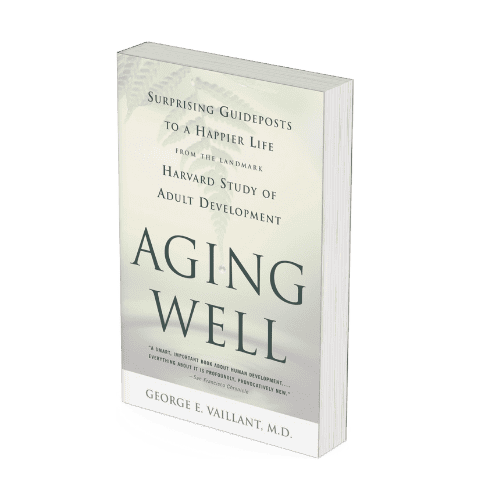
Aging Well by George E. Vaillant.
Aging Well by George E. Vaillant. The Author. George E. Vaillant is a psychiatrist, professor and one of the world’s leading researchers on adult development and mental health. He’s most famous for leading the Harvard Study of Adult Development, one of the longest-running studies of human life ever, following participants for over 70 years. Vaillant’s research is focused on what really predicts happiness, health and resilience over the whole life course. His findings are based on decades of actual data about humans, not any theory or trends. He is revered for debunking myths about success, aging

What Every Therapist Ought to Know By Stan Tatkin
What Every Therapist Ought to Know By Stan Tatkin The Author. Stan Tatkin, who specializes in relationships, attachment and the brain and has served as a clinical psychologist, teacher and researcher. To this day, he is the creator of the PACT Method (Psychobiological Approach to Couple Therapy), a combination of neuroscience, attachment theory & physiology. Tatkin has taught thousands of therapists around the world, and is well-known for translating brain science into something accessible to therapists and used in therapy. His expertise is in helping therapists make sense of the nervous system’s driving force in behaviour,

Building the Fence
Two brothers lived on neighbouring farms, separated by a small stream. For years, they worked side by side, shared tools, and helped each other through every harvest. Their bond was strong, until one day, a small misunderstanding turned into a bitter argument. It started over a stray calf that crossed the stream. Harsh words followed, then silence. The younger brother, filled with resentment, took his plough and cut a deep trench between the two lands so that the stream widened and grew difficult to cross. “That’ll show him,” he muttered. A few days later, a travelling carpenter knocked on

The Monkey and the Shark
On the edge of the Indian Ocean, where the waves touch the roots of the mangrove trees, lived a lively monkey in a tall mango tree. Every morning, he ate his fill of golden mangoes and tossed the skins into the water below. One afternoon, a shark swam by and noticed the fruit drifting on the surface. “What’s that delicious smell?” the shark asked. “Mangoes,” said the monkey, holding one up. “They grow on my tree. Would you like to try one?” The shark nodded eagerly, and the monkey threw him a mango. It was the sweetest thing the

The Cheetah’s Whisker
There was once a young woman named Amina who lived in a small Ethiopian village. Her husband, Hassan, had just returned from years of war. But the man who came home was not the man she had loved. He was restless, easily angered, and distant. No words of comfort or affection seemed to reach him anymore. One evening, in despair, Amina went to the village healer. The old woman listened to her story and nodded slowly. “There is a potion that can bring love and peace back to your home,” she said. “But to make it, you must bring
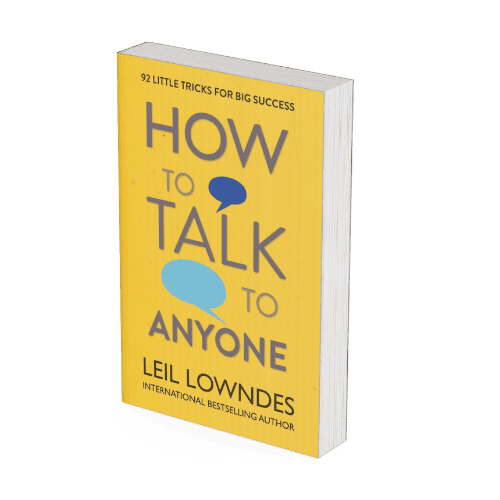
How to Talk to Anyone by Leil Lowndes
How to Talk to Anyone by Leil Lowndes The Author. Leil Lowndes has long engaged in studying the art of human connection. She’s a communication expert, speaker and former radio host who’s written a number of books on social skills, but How to Talk to Anyone is her most popular work to date. She writes with both humour and real life experience, not an ivory tower academic perspective. Knowing that not everyone feels confident walking into a room full of strangers, she provides simple, unvarnished steps for everyone to improve your people skills. Her tone is
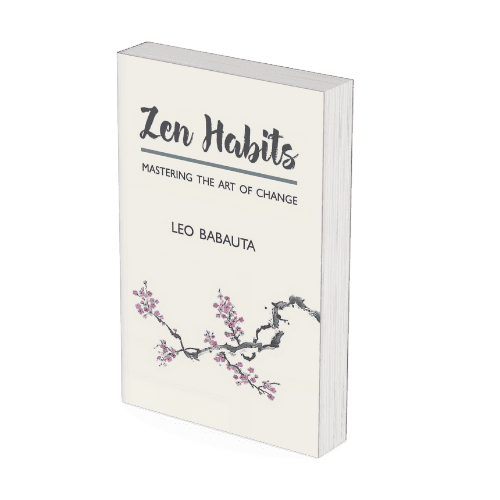
Zen Habits: Handbook for Life by Leo Babauta
Zen Habits: Handbook for Life by Leo Babauta The Author. Leo Babauta is the creator of Zen Habits, a blog that’s been around since the early 2000s and has quietly become one of the most respected voices in the personal development space. He’s not selling hype or hustle, he’s selling simplicity. Leo is a father of six, lives a minimalist lifestyle and writes based on experience rather than theory. His stance is measured, no-nonsense, and refreshingly grounded. He doesn’t pretend to have all the answers. He’s saying instead that as he‘ built better habits, streamlined life