How to Talk to Anyone by Leil Lowndes
The Author. Leil Lowndes has long engaged in studying the art of human connection. She’s a communication expert, speaker and former radio host who’s written a number of books on social skills, but How to Talk to Anyone is her most popular work to date. She writes with both humour and real life experience, not an ivory tower academic perspective. Knowing that not everyone feels confident walking into a room full of strangers, she provides simple, unvarnished steps for everyone to improve your people skills. Her tone is playful yet practical. She understands that we all want to form stronger connections, socially and professionally, yet don’t want to pretend or overthink it.
Short of “How to Talk to Anyone”.
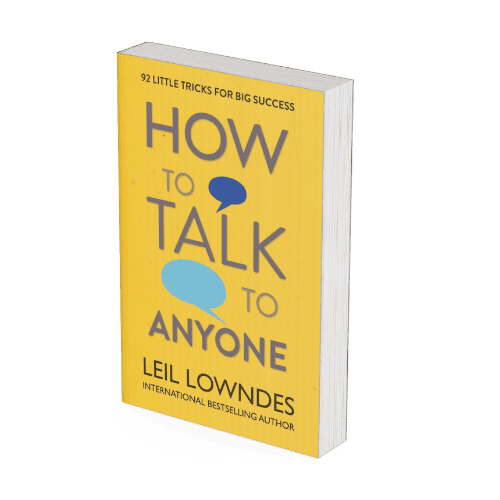
This is precisely what the title says it’s going to be. It’s a guide for becoming more confident and approachable, effective and engaging in conversations whether you’re speaking to your boss, to a stranger at a party or just to someone you have met on a date. Leil Lowndes has shared 92 accessible methods that will help you connect better with people. They all have an attractive title (perhaps “Sticky Eyes,” or “The Big-Baby Pivot,” or “Never the Naked Thank You”) and a brief rundown of ways and when to apply it. The chapters are brief and the advice is clear, with none of the fluff.
She ranges from first impressions and body language to more in-depth conversations and networking. Some advice is about knowing how to speak, such as using your tone and volume to convey warmth or confidence, and others more about what to say (or not say). A major part of the book deals with nonverbal cues: how to stand, where to look and when to nod. These cues are, according to Leil, louder than your words.
One of the stronger themes across the entire book is connecting before you open your mouth. Your face, your posture, your vibe, you set the tone. Down there the book goes on to demonstrate how to maintain momentum, establish trust quickly and leave them feeling seen, heard and remembered.
It’s not an excavation of the heart of psychology or emotional intelligence. It’s a little handbook of everyday living. If you’re not great at small talk, have difficulty adjusting to new environments or just want to start polishing your people skills, this book provides clear, bite-sized tools that you can try right away.
My Take on “How to Talk to Anyone”. This book is practical as hell, and that’s why I give my ratings. No more theoretical fluff or over-intellectualised social dynamics here. I want tools I can actually use — or take to clients who need something they can put into practice today. This book gives you that.
I’ve had so many clients, colleagues, and yes, friends tell me they’re “bad at people” or “not naturally social.” What they truly mean is that the small things, the subtle stuff, that make people comfortable have never been taught to them. This is like a course in social nuance we were not learning from my parents in school.
It’s particularly helpful for those who have a tendency to overthink interactions or experience social anxiety. Because Leil doesn’t just say “just be confident”; she breaks it down. She shows you how to walk into a room. How to smile. How to listen in a way that conveys to people that you genuinely care. None of it feels fake. It’s just solid technique.
That said, you don’t have to apply all 92 tips. Some will land more than others. I wouldn’t recommend you turning yourself into a robot striving to tick off every move. But choose 3, or 4, and begin there. That’s where the change occurs — small tweaks, not personality overhauls.
What I also appreciated is that this book is not simply about “impressing” people. It’s about connecting. Yes, when it comes to networking, professional situations, it helps, but, in its core, is this idea: If you make people feel seen and valued, they will take care of the rest of it. That relates to therapy, coaching, relationships, work, everywhere.
One of my favourite bits of advice was how subtle changes to attention and body language can be effective. You’re not supposed to be an excellent speaker. All you need to do is be there and learn to read the room. Someone who wants to make improvements in social skills, without feeling phony is welcome in this book.
Whether your clients or colleagues, I invite them to incorporate the guidance of “How to Talk to Anyone”. Teach clients that connection is a skill not a disposition or a personality trait. You can learn and practice it. Guide clients to spot small changes in their behaviour, like eye contact, tone, posture — things that boost confidence. Have tips on first impressions – advise specific techniques for first impressions, particularly with clients trying to get through dating, interviews, or networking. Embrace socially anxious clients by offering “conversation openers” from the book for simple low-pressure discussions. Use it as a guide to redirect your attention from “saying the right thing” to validating that person. Told clients that often body language and nonverbal signals — usually more valuable than words — hold more power than simple words. Promote that being a good listener is a superpower. It’s not simply a question of speaking more skillfully.
This book can help young adults or teens feel confident in their social situations in reality, avoiding scripted, fake personas. For professionals: apply the pieces to build trust rapidly with clients, particularly in the beginning stages of rapport-building. For group settings, try incorporating some of the techniques during icebreakers, or during social skill-building exercises.
In short. How to Talk to Anyone is a no-nonsense guide to better conversations and stronger connections. Leil Lowndes has taken the mystery from social success: Here is something you can use immediately to achieve real results. Who this book helps will allow you to be a part of the world in an authentic way, whether or not you naturally become an outgoing guy or awkward, but will help you show up well.
How to Talk to Anyone by Leil Lowndes
The Author. Leil Lowndes has long engaged in studying the art of human connection. She’s a communication expert, speaker and former radio host who’s written a number of books on social skills, but How to Talk to Anyone is her most popular work to date. She writes with both humour and real life experience, not an ivory tower academic perspective. Knowing that not everyone feels confident walking into a room full of strangers, she provides simple, unvarnished steps for everyone to improve your people skills. Her tone is playful yet practical. She understands that we all want to form stronger connections, socially and professionally, yet don’t want to pretend or overthink it.
Short of “How to Talk to Anyone”.
This is precisely what the title says it’s going to be. It’s a guide for becoming more confident and approachable, effective and engaging in conversations whether you’re speaking to your boss, to a stranger at a party or just to someone you have met on a date. Leil Lowndes has shared 92 accessible methods that will help you connect better with people. They all have an attractive title (perhaps “Sticky Eyes,” or “The Big-Baby Pivot,” or “Never the Naked Thank You”) and a brief rundown of ways and when to apply it. The chapters are brief and the advice is clear, with none of the fluff.
She ranges from first impressions and body language to more in-depth conversations and networking. Some advice is about knowing how to speak, such as using your tone and volume to convey warmth or confidence, and others more about what to say (or not say). A major part of the book deals with nonverbal cues: how to stand, where to look and when to nod. These cues are, according to Leil, louder than your words.
One of the stronger themes across the entire book is connecting before you open your mouth. Your face, your posture, your vibe, you set the tone. Down there the book goes on to demonstrate how to maintain momentum, establish trust quickly and leave them feeling seen, heard and remembered.
It’s not an excavation of the heart of psychology or emotional intelligence. It’s a little handbook of everyday living. If you’re not great at small talk, have difficulty adjusting to new environments or just want to start polishing your people skills, this book provides clear, bite-sized tools that you can try right away.
My Take on “How to Talk to Anyone”. This book is practical as hell, and that’s why I give my ratings. No more theoretical fluff or over-intellectualised social dynamics here. I want tools I can actually use — or take to clients who need something they can put into practice today. This book gives you that.
I’ve had so many clients, colleagues, and yes, friends tell me they’re “bad at people” or “not naturally social.” What they truly mean is that the small things, the subtle stuff, that make people comfortable have never been taught to them. This is like a course in social nuance we were not learning from my parents in school.
It’s particularly helpful for those who have a tendency to overthink interactions or experience social anxiety. Because Leil doesn’t just say “just be confident”; she breaks it down. She shows you how to walk into a room. How to smile. How to listen in a way that conveys to people that you genuinely care. None of it feels fake. It’s just solid technique.
That said, you don’t have to apply all 92 tips. Some will land more than others. I wouldn’t recommend you turning yourself into a robot striving to tick off every move. But choose 3, or 4, and begin there. That’s where the change occurs — small tweaks, not personality overhauls.
What I also appreciated is that this book is not simply about “impressing” people. It’s about connecting. Yes, when it comes to networking, professional situations, it helps, but, in its core, is this idea: If you make people feel seen and valued, they will take care of the rest of it. That relates to therapy, coaching, relationships, work, everywhere.
One of my favourite bits of advice was how subtle changes to attention and body language can be effective. You’re not supposed to be an excellent speaker. All you need to do is be there and learn to read the room. Someone who wants to make improvements in social skills, without feeling phony is welcome in this book.
Whether your clients or colleagues, I invite them to incorporate the guidance of “How to Talk to Anyone”. Teach clients that connection is a skill not a disposition or a personality trait. You can learn and practice it. Guide clients to spot small changes in their behaviour, like eye contact, tone, posture — things that boost confidence. Have tips on first impressions – advise specific techniques for first impressions, particularly with clients trying to get through dating, interviews, or networking. Embrace socially anxious clients by offering “conversation openers” from the book for simple low-pressure discussions. Use it as a guide to redirect your attention from “saying the right thing” to validating that person. Told clients that often body language and nonverbal signals — usually more valuable than words — hold more power than simple words. Promote that being a good listener is a superpower. It’s not simply a question of speaking more skillfully.
This book can help young adults or teens feel confident in their social situations in reality, avoiding scripted, fake personas. For professionals: apply the pieces to build trust rapidly with clients, particularly in the beginning stages of rapport-building. For group settings, try incorporating some of the techniques during icebreakers, or during social skill-building exercises.
In short. How to Talk to Anyone is a no-nonsense guide to better conversations and stronger connections. Leil Lowndes has taken the mystery from social success: Here is something you can use immediately to achieve real results. Who this book helps will allow you to be a part of the world in an authentic way, whether or not you naturally become an outgoing guy or awkward, but will help you show up well.
“Leadership is not about being in charge. It is about taking care of those in your charge.“
Recent Thoughts

Performance Lab Environment for Mental Clarity and Focus
High performers are seldom incompetent. They struggle with carryover. Carryover of stress. Carryover of emotion. Carryover of intensity from one room to another.

High Performance Without Burnout
When work is in the high performers’ way, it is very addictive. They are quick, decisive, disciplined, competitive and outcome-oriented. They raise standards.