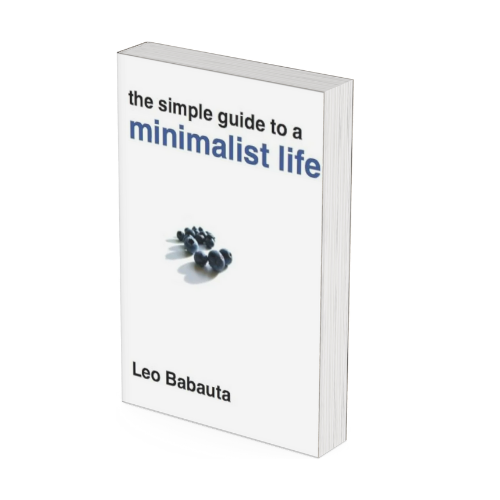
The Simple Guide to a Minimalist Life
by Leo Babauta
Leo Babauta is as strong a minimalist voice in the literary and online spaces as you need him to be. Like much, he gives advice for simplifying one’s life, practicing mindful habits and clearing the mind in his trademark one-lines, one-way style.
In their time of consumerist culture, Babauta’s best-known writings talk about the necessity of living a simple life that is both more balanced and self-directed.
As his own story of downsizing unfolds, Babauta shows his readers to live more mindful, to relieve stress, and to consider what actually matters most. In addition, his book, The Simple Guide to a Minimalist Life, is an engaging guide for all people seeking to learn more about minimalism, and how this can be put into practice.
In The Simple Guide to a Minimalist Life, Leo Babauta offers an intuitive guideline for a minimalist life. He recommends that people own less in order to focus on what is most important in life. Additionally, the book emphasizes the importance of simple living, mindfulness, and living life with harmony for relationships, health, and productivity and presents hands-on guidelines for decluttering the mind and the body, such as the schedule, home, and work environment.
Babauta explains the reduction of material possessions to relieve stress, recover time, and cultivate personal fulfillment. This book author hopes that through it, you and my reader will be able to achieve life well when you come down to the essentials. Second, Babauta offers a strong case in favor of minimalism not as abjection but as a pathway to happiness without always wanting more.
To break with the yoke of today’s consumer society, whose endless bombardment through advertising, social media, and the influencers to which I’ve been subjected, I read The Simple Guide to a Minimalist Life. We are surrounded by goods and services promising to make us happier, more complete, or the definition of “successful.”
It’s easy to get caught up in this cycle and end up believing material items are the heart of happiness. But as a refreshing contrast to this vision, Babauta’s book battled the urge for worldly goods by teaching me to value what I already had.
The theme I thought so carefully about was Babauta’s opinion on materialism and how we always buy things on autopilot, following the latest trends or thinking that all is “essential.” His work focused on the importance of making small changes with the intention to leave an impression by consuming slowly. At Babauta, the life of minimalist living is about creating space for all aspects of life – physical, mental, emotional.
Instead of just accumulating a few worthless things at the end of the day, this book reminded me incredibly well of the pleasure of living well with purpose and clear-eyed purpose. Babauta encourages his readers to let go of the fight to possess even as society exhorts them to make more. Not only was his system liberating, for him, but it made me think (of course, as many would) about the work of effort, resource and cash that I invest into needless distractions.
And the emphasis on mindfulness is another touchstone of The Simple Guide to a Minimalist Life. Minimalism is not merely cleaning up physical space, Babauta said; it also entails clearing one’s head. His advice for us is to reduce the complexity of life — relationships, commitments, our daily routines — so that our interests shine through.
So much less stuff in my life was the point, and I felt this, too, on a daily basis as a result of minimalism. What it’s really about after all, is a meaningful life. It’s here to teach anyone who is struggling to create inner peace and fulfillment in these day and age of all the competing pressures and demands upon modern societies.
I Encourage Clients and Colleagues to Apply the Insights from The Simple Guide to a Minimalist Life.
Discovering the Stuff We Care About: Identify the stuff we care about and create a list of the people, things, and experiences that contribute most to the overall content of everyday life.
In many cases cleanliness and organization of a physical space shows a clear head. In effect, eliminating the material clutter itself could help you concentrate better and reduce worry.
The Practice of Mindfulness: This is concentrating upon and choosing consciously what you do with yourself, whether it be purchases or commitments. Limited
Exposure To Consumption: Social media always puts us in the position of needing to buy and obtain. As a result, resist those impulses and examine whether the next “must-have” is essential in the first place.
Minimize your day to day by doing it quickly. This results in more time for real rest and work.
Relationships, Growth and Good Health should come before Money: Relationships, personal development and physical health are the goal and not financial possessions – a means to an end.
Reduction of clutter: Some reflections and thoughts are better off to be saved on paper or elsewhere.
Creating Strong Bonds: When it come to relationships, the most important thing doesn’t be quantity, but rather, quality.
That’s why, cherish relationships that truly elevate your quality of life.
If you want to create memories that last a lifetime, remember to pay more attention to your experiences than the things you own.
Sustainable, Less Waste and Eco-Based Lifestyle, Less Wasted: Minimalism helps with a more conscious and caring sustainable lifestyle is a less wasteful and friendly to the earth world.
In Summary.
Finally, Leo Babauta’s book, The Simple Guide to a Minimalist Life by Leo Babauta is enlightening and useful in making sense of the world that surrounds us if all of us want to be an easy minimalist human being in present-day society is to live simple and sustainable. Its message is in a very human and poignant way: That one should live a life of intentional choices–making space for what really matters rather than letting the call to be all around you.
The Simple Guide to a Minimalist Life
by Leo Babauta
Leo Babauta is as strong a minimalist voice in the literary and online spaces as you need him to be. Like much, he gives advice for simplifying one’s life, practicing mindful habits and clearing the mind in his trademark one-lines, one-way style.
In their time of consumerist culture, Babauta’s best-known writings talk about the necessity of living a simple life that is both more balanced and self-directed.
As his own story of downsizing unfolds, Babauta shows his readers to live more mindful, to relieve stress, and to consider what actually matters most. In addition, his book, The Simple Guide to a Minimalist Life, is an engaging guide for all people seeking to learn more about minimalism, and how this can be put into practice.
In The Simple Guide to a Minimalist Life, Leo Babauta offers an intuitive guideline for a minimalist life. He recommends that people own less in order to focus on what is most important in life. Additionally, the book emphasizes the importance of simple living, mindfulness, and living life with harmony for relationships, health, and productivity and presents hands-on guidelines for decluttering the mind and the body, such as the schedule, home, and work environment.
Babauta explains the reduction of material possessions to relieve stress, recover time, and cultivate personal fulfillment. This book author hopes that through it, you and my reader will be able to achieve life well when you come down to the essentials. Second, Babauta offers a strong case in favor of minimalism not as abjection but as a pathway to happiness without always wanting more.
To break with the yoke of today’s consumer society, whose endless bombardment through advertising, social media, and the influencers to which I’ve been subjected, I read The Simple Guide to a Minimalist Life. We are surrounded by goods and services promising to make us happier, more complete, or the definition of “successful.”
It’s easy to get caught up in this cycle and end up believing material items are the heart of happiness. But as a refreshing contrast to this vision, Babauta’s book battled the urge for worldly goods by teaching me to value what I already had.
The theme I thought so carefully about was Babauta’s opinion on materialism and how we always buy things on autopilot, following the latest trends or thinking that all is “essential.” His work focused on the importance of making small changes with the intention to leave an impression by consuming slowly. At Babauta, the life of minimalist living is about creating space for all aspects of life – physical, mental, emotional.
Instead of just accumulating a few worthless things at the end of the day, this book reminded me incredibly well of the pleasure of living well with purpose and clear-eyed purpose. Babauta encourages his readers to let go of the fight to possess even as society exhorts them to make more. Not only was his system liberating, for him, but it made me think (of course, as many would) about the work of effort, resource and cash that I invest into needless distractions.
And the emphasis on mindfulness is another touchstone of The Simple Guide to a Minimalist Life. Minimalism is not merely cleaning up physical space, Babauta said; it also entails clearing one’s head. His advice for us is to reduce the complexity of life — relationships, commitments, our daily routines — so that our interests shine through.
So much less stuff in my life was the point, and I felt this, too, on a daily basis as a result of minimalism. What it’s really about after all, is a meaningful life. It’s here to teach anyone who is struggling to create inner peace and fulfillment in these day and age of all the competing pressures and demands upon modern societies.
I Encourage Clients and Colleagues to Apply the Insights from The Simple Guide to a Minimalist Life.
Discovering the Stuff We Care About: Identify the stuff we care about and create a list of the people, things, and experiences that contribute most to the overall content of everyday life.
In many cases cleanliness and organization of a physical space shows a clear head. In effect, eliminating the material clutter itself could help you concentrate better and reduce worry.
The Practice of Mindfulness: This is concentrating upon and choosing consciously what you do with yourself, whether it be purchases or commitments. Limited
Exposure To Consumption: Social media always puts us in the position of needing to buy and obtain. As a result, resist those impulses and examine whether the next “must-have” is essential in the first place.
Minimize your day to day by doing it quickly. This results in more time for real rest and work.
Relationships, Growth and Good Health should come before Money: Relationships, personal development and physical health are the goal and not financial possessions – a means to an end.
Reduction of clutter: Some reflections and thoughts are better off to be saved on paper or elsewhere.
Creating Strong Bonds: When it come to relationships, the most important thing doesn’t be quantity, but rather, quality.
That’s why, cherish relationships that truly elevate your quality of life.
If you want to create memories that last a lifetime, remember to pay more attention to your experiences than the things you own.
Sustainable, Less Waste and Eco-Based Lifestyle, Less Wasted: Minimalism helps with a more conscious and caring sustainable lifestyle is a less wasteful and friendly to the earth world.
In Summary.
Finally, Leo Babauta’s book, The Simple Guide to a Minimalist Life by Leo Babauta is enlightening and useful in making sense of the world that surrounds us if all of us want to be an easy minimalist human being in present-day society is to live simple and sustainable. Its message is in a very human and poignant way: That one should live a life of intentional choices–making space for what really matters rather than letting the call to be all around you.
“Resilience is not about bouncing back. It’s about bouncing forward into a new reality.”
Recent Thoughts

Performance Lab Environment for Mental Clarity and Focus
High performers are seldom incompetent. They struggle with carryover. Carryover of stress. Carryover of emotion. Carryover of intensity from one room to another.

High Performance Without Burnout
When work is in the high performers’ way, it is very addictive. They are quick, decisive, disciplined, competitive and outcome-oriented. They raise standards.