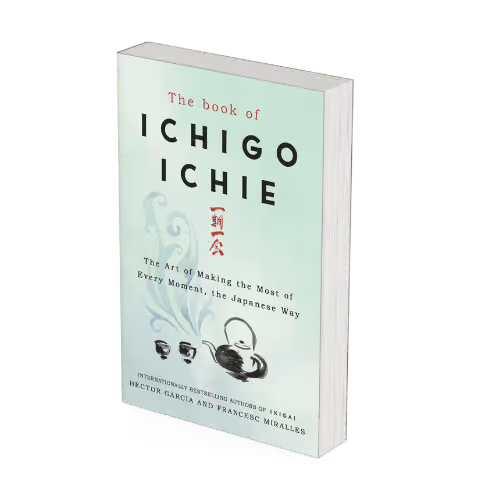
The Book of Ichigo Ichie
by Francesc Miralles and Héctor García
Francesc Miralles (born in Spain) is a Spanish author, translator, and musician: Francesc Miralles focuses on happiness, mindfulness, and purpose. Miralles and Héctor García are among the authors with several works on Japanese wisdom and cultural philosophy, including the famous Ikigai series.
Miralles taps his extensive learning from Eastern cultures and psychology to synthesize ancient Japanese tradition with modern practices and healing together to help us think of well-being in contemporary day in and out. He writes in accessible and deep prose, blending practical wisdom with lofty philosophical ideas and won him global audiences.
Ichigo Ichie (one and the same type of book) teaches Western readers about the Japanese term Ichigo Ichie. Ichigo Ichie, which translates as “once in a lifetime” or “this moment exists only now,” is the practice of cherishing each moment and seeing every meeting as a one-of-a-kind and irreplaceable opportunity.
This idea focuses on having pleasure in the moment. To find meaning, one must accept life is so fleeting a concept. The book also provides practical day-to-day advice. Readers teach themselves to savor each fleeting experience. To live mindfully is to appreciate, to be inquisitive. Zen helps teach awareness in humble activities. Plus, the authors build mindfulness into philosophy. Presence grows through daily behavior. Exercises encourage readers to notice the little things in life. Stories and insights provide emotional, cultural depth. We live and feel when we actively practice these moments of daily life with purpose. For the key to joy is now, joy, it is, to embrace. Plus, the book does not unduly complicate mindfulness. Routine gets different if wonder gets worked into daily life intentionally. Awareness, at last, produces fulfillment.
I was also reminded when reading The Book of Ichigo Ichie. I learnt to enjoy life’s humble moments. Small regular events remain unnoticed or unfaltered. There is a connection to others in every meeting and a connection to ourselves. We all become easily accustomed. This one’s a book, about beauty neglected. Mindfulness enhances awareness in therapy and daily life. As a therapist, I encourage living mindfully present. Daily experiences allow clients to make do. This book suits that perspective well. It provides culturally rich insights. Intentional moments create a better therapy and coaching. Another technique Ichigo Ichie embraces is gratitude for the small realisations as well. Mindfulness isn’t depicted as a miraculous cure. The transience of life gives acceptance to the darker times.
There are some important lessons which clients and colleagues can receive from this book:
Embrace the Impermanence: Let an individual live in the present moment and know that this will never happen again. This can be particularly useful for those embarking upon the transition and helping them let go of prior regrets and worries for the future.
Be More Present in All You Do: Teach yourself and those around you to be there really. Mindfulness helps us to relate more fully to ourselves as well as our surrounding environment.
Create Small Daily Rituals: Start with small routines that honor the days, whether that means catching a sip of coffee in the morning, going for a mindful walk, or simply cherishing when things are peaceful. Gradually but surely those little acts build up resilience and gladness.
Seek Gratitude in Day-to-day Moments: Form the practice of observing and appreciating small things that you notice and delight in little things that normally you overlook. Autumn leaf colour or feeling good during a nice chat, that can be such a happy moment for me.
Transform Encounters into Experiences To Be Gave Thanks : Make Every interaction a Unique Experience-every day with loved ones or strangers should be seen in terms of an experience which is precious and unforgettable. Making deeper connections in the moment yields lasting memories and improves relationships.
The key point is: Reflectively Reflect Without Judgement: Instead of taking a step back and looking back on the events, step back and let your emotions and thoughts flow and then slowly walk around and reflect gently yourself to learn from the past and evolve. Enjoy learning from every moment with respect to what happens next.
Balance living in the now with goal setting: To practice Ichigo Ichie does not mean giving up on our goals. Instead, we can focus on future-focused attitudes together with enjoyment for present day life.
The result is a force which can make self-doubt about the future seem more empowering or less.
The Book of Ichigo Ichie encourages you to live in the moment now, to put everything now into perspective; to love each step as though there would be no point in it again. This wisdom helps us seek pleasure in the present, and to enjoy every moment, and to come to terms with the essence of life – the beautiful and ephemeral.
The Book of Ichigo Ichie
by Francesc Miralles and Héctor García
Francesc Miralles (born in Spain) is a Spanish author, translator, and musician: Francesc Miralles focuses on happiness, mindfulness, and purpose. Miralles and Héctor García are among the authors with several works on Japanese wisdom and cultural philosophy, including the famous Ikigai series.
Miralles taps his extensive learning from Eastern cultures and psychology to synthesize ancient Japanese tradition with modern practices and healing together to help us think of well-being in contemporary day in and out. He writes in accessible and deep prose, blending practical wisdom with lofty philosophical ideas and won him global audiences.
Ichigo Ichie (one and the same type of book) teaches Western readers about the Japanese term Ichigo Ichie. Ichigo Ichie, which translates as “once in a lifetime” or “this moment exists only now,” is the practice of cherishing each moment and seeing every meeting as a one-of-a-kind and irreplaceable opportunity.
This idea focuses on having pleasure in the moment. To find meaning, one must accept life is so fleeting a concept. The book also provides practical day-to-day advice. Readers teach themselves to savor each fleeting experience. To live mindfully is to appreciate, to be inquisitive. Zen helps teach awareness in humble activities. Plus, the authors build mindfulness into philosophy. Presence grows through daily behavior. Exercises encourage readers to notice the little things in life. Stories and insights provide emotional, cultural depth. We live and feel when we actively practice these moments of daily life with purpose. For the key to joy is now, joy, it is, to embrace. Plus, the book does not unduly complicate mindfulness. Routine gets different if wonder gets worked into daily life intentionally. Awareness, at last, produces fulfillment.
I was also reminded when reading The Book of Ichigo Ichie. I learnt to enjoy life’s humble moments. Small regular events remain unnoticed or unfaltered. There is a connection to others in every meeting and a connection to ourselves. We all become easily accustomed. This one’s a book, about beauty neglected. Mindfulness enhances awareness in therapy and daily life. As a therapist, I encourage living mindfully present. Daily experiences allow clients to make do. This book suits that perspective well. It provides culturally rich insights. Intentional moments create a better therapy and coaching. Another technique Ichigo Ichie embraces is gratitude for the small realisations as well. Mindfulness isn’t depicted as a miraculous cure. The transience of life gives acceptance to the darker times.
There are some important lessons which clients and colleagues can receive from this book:
Embrace the Impermanence: Let an individual live in the present moment and know that this will never happen again. This can be particularly useful for those embarking upon the transition and helping them let go of prior regrets and worries for the future.
Be More Present in All You Do: Teach yourself and those around you to be there really. Mindfulness helps us to relate more fully to ourselves as well as our surrounding environment.
Create Small Daily Rituals: Start with small routines that honor the days, whether that means catching a sip of coffee in the morning, going for a mindful walk, or simply cherishing when things are peaceful. Gradually but surely those little acts build up resilience and gladness.
Seek Gratitude in Day-to-day Moments: Form the practice of observing and appreciating small things that you notice and delight in little things that normally you overlook. Autumn leaf colour or feeling good during a nice chat, that can be such a happy moment for me.
Transform Encounters into Experiences To Be Gave Thanks : Make Every interaction a Unique Experience-every day with loved ones or strangers should be seen in terms of an experience which is precious and unforgettable. Making deeper connections in the moment yields lasting memories and improves relationships.
The key point is: Reflectively Reflect Without Judgement: Instead of taking a step back and looking back on the events, step back and let your emotions and thoughts flow and then slowly walk around and reflect gently yourself to learn from the past and evolve. Enjoy learning from every moment with respect to what happens next.
Balance living in the now with goal setting: To practice Ichigo Ichie does not mean giving up on our goals. Instead, we can focus on future-focused attitudes together with enjoyment for present day life.
The result is a force which can make self-doubt about the future seem more empowering or less.
“True healing occurs when I accept the circumstances of my life and forgive myself.”
Recent Thoughts

Performance Lab Environment for Mental Clarity and Focus
High performers are seldom incompetent. They struggle with carryover. Carryover of stress. Carryover of emotion. Carryover of intensity from one room to another.

High Performance Without Burnout
When work is in the high performers’ way, it is very addictive. They are quick, decisive, disciplined, competitive and outcome-oriented. They raise standards.