Nonviolent Communication
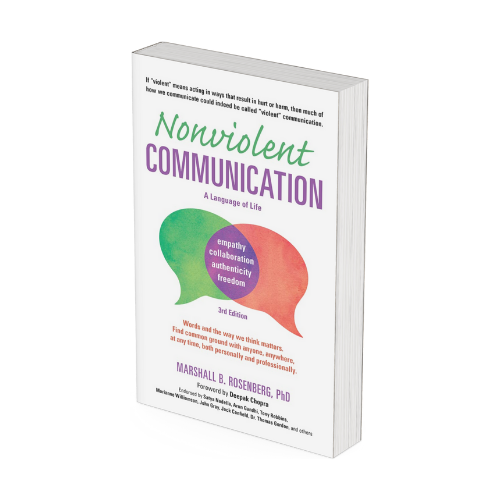
by Marshall Rosenberg
Marshall Rosenberg (1934-2015) was a psychologist, mediator and educator who developed the Nonviolent Communication (NVC) method. He focused on issues of conflict resolution, empathy and compassionate dialogue. His global workshops empowered people from families to war-torn communities to converse in a more compassionate manner, more friendly and less hostile. Marshall Rosenberg, who argued that most of our conflicts stem from miscommunication and unmet needs, devoted his life to teaching people how to express themselves without becoming aggressive. With the power he has had in guiding therapists, educators, and leaders alike, his book is a must-read guide for those who wish to enhance and change their relationships.
Nonviolent Communication (NVC), a book by Marshall Rosenberg, is an invaluable guide in the field that helps communication improve with empathy and honesty — all the while minimizing violence. The book presents a four-step process to enable individuals to express themselves without blame or judgment, and to listen with understanding to others. NVC has four parts:
Observations: It’s explicit, unqualified observation of what we find or hear.
Feelings: Talking and not hiding behind vague language about how we feel.
Needs: Finding the underlying needs in our feelings.
Requests: Requesting specific actions to alleviate those needs. (Many of the conflicts are over the way we express instead of the issues themselves, Rosenberg says.)
He invites people to quit habitual patterns of criticism, defensiveness and demands and use language which creates connection, mutual respect with others instead. NVC helps people avoid misunderstandings, deepen relationship building and deal with disputes: all of which makes them comfortable on the other person’s side as well.
The book also presents evidence of the significance and importance in self-empathy, active listening, the cultivation and sharing of gratitude in a way that deepens interpersonal relations. Rosenberg gives all kinds of real-life examples, exercises and dialogues that will let readers practice the NVC method personally and professionally.
It’s all about making that shift in their understanding of nonviolence, moving away from blame and control towards collaboration and empathy. This is one of the best books on communication you can read without making conversations about power and power competition. Be it when we’re dealing with clients or partners or your family members, or even your own thoughts, Rosenberg’s method makes you pause and start thinking about what is going on inside.
Some of the things I’m drawn to about NVC is that it forces you to confront how you normally speak. We are more apt, Rosenberg reminds us, to jump to conclusions or lay blame and villainy, but most conflicts aren’t about “right” or “wrong”; they’re about unmet needs. His breaking down his communication into simple, actionable steps makes it easy to apply in real life.
That said NVC takes practice, though. Easily there is a risk of the kind of back-tracking we’ve experienced; responding emotionally or emotionally, pressuring, or thinking we understand a person, and thinking we know what they feel. But I’m grateful that the book is more than a paean to theory and teaches you hands-on exercises and examples (and how to be aware of your own communication.)
NVC is life-altering for therapists, coaches, and just anyone who works with people. It forces us to listen with greater attentiveness than words, to understand the emotions and needs beneath what people are saying, to respond in a way that de-escalates tension instead of fanning the flames. I have witnessed first-hand the importance of applying these principles in either a therapeutic session in therapy or day-to-day living and relationships. And maybe the most powerful insight of all is what you are saying is that if you switch from demanding to requesting.
Often, we don’t notice how threatening or controlling our words can be — even when we believe we’re being “nice.” Talking to one another when we learn to ask for words we are being respectful of in a direct manner rather than to be demanding, can be much more fruitful. I also love that NVC is self-talking. How often do we talk bad about ourselves? When we do so in our minds, we are relieved of guilt and self-accusation, the two essential elements so crucial to our growth. Nonviolent communication is a revelation at a large level. It’s key reading for anyone who wants to make their relationships better, whether they are individuals or professionals. It may not be a simple thing to change how we talk, but if we can do a little piece of what Rosenberg gives us, we can be really happy from how we relate to one another.
This is what I think coaches and therapists and anyone in a helping profession should take away from this book.
Listen out of curiosity, not judgment. Listen when others talk, concentrate not on conclusions but on the feeling and need.
You cannot label behaviour just as “good” or “bad” but rather describe what you witness without preconceived notions.
Recognise the power of emotions. Help a customer identify and express his feelings instead of bottling up or letting them explode.
Start teaching people to speak up about their needs. So many conflicts come about because people start to expect others to “just know” what they want.
Clarity prevents resentment. Promote requests over demands. A request enables choice; a demand engenders resistance.
This little shift makes a big difference. Practise self-empathy. Now before we are able to help others we need to evaluate ourselves so we don’t judge ourselves. Assist clients to move from blame towards responsibility. So rather than letting others hold responsibility for how they feel, they learn to take ownership of their feelings and communicate the way they feel.
Use NVC to have tough discussions, talk it out. This model enables people to communicate without hostility when engaging in therapy sessions or workplace disputes in a therapeutic context. Encourage appreciation and gratitude. It changes the relationship from criticism to connection and expresses genuine gratitude.
And NVC, if we get into our work in ways that make it our job to get that sense, can lead people to grow healthier, more authentic relationships with themselves and with others alike.
In Summary.
Marshall Rosenberg’s Nonviolent Communication is a must-read for those who want to strengthen their connection with others. It provides a simple but effective method in which people can communicate with candor and compassion, cutting down conflict and fostering closeness. This book is not just about having a different dialogue. It’s the changing of the way we think and are in relationship with others so that those deeper bonds are the most respectful of all. If you’re doing some work as a therapist, coach, or just looking for ways to improve relationships, NVC is a skill worth being adept at.
Nonviolent Communication
by Marshall Rosenberg
Marshall Rosenberg (1934-2015) was a psychologist, mediator and educator who developed the Nonviolent Communication (NVC) method. He focused on issues of conflict resolution, empathy and compassionate dialogue. His global workshops empowered people from families to war-torn communities to converse in a more compassionate manner, more friendly and less hostile. Marshall Rosenberg, who argued that most of our conflicts stem from miscommunication and unmet needs, devoted his life to teaching people how to express themselves without becoming aggressive. With the power he has had in guiding therapists, educators, and leaders alike, his book is a must-read guide for those who wish to enhance and change their relationships.
Nonviolent Communication (NVC), a book by Marshall Rosenberg, is an invaluable guide in the field that helps communication improve with empathy and honesty — all the while minimizing violence. The book presents a four-step process to enable individuals to express themselves without blame or judgment, and to listen with understanding to others. NVC has four parts:
Observations: It’s explicit, unqualified observation of what we find or hear.
Feelings: Talking and not hiding behind vague language about how we feel.
Needs: Finding the underlying needs in our feelings.
Requests: Requesting specific actions to alleviate those needs. (Many of the conflicts are over the way we express instead of the issues themselves, Rosenberg says.)
He invites people to quit habitual patterns of criticism, defensiveness and demands and use language which creates connection, mutual respect with others instead. NVC helps people avoid misunderstandings, deepen relationship building and deal with disputes: all of which makes them comfortable on the other person’s side as well.
The book also presents evidence of the significance and importance in self-empathy, active listening, the cultivation and sharing of gratitude in a way that deepens interpersonal relations. Rosenberg gives all kinds of real-life examples, exercises and dialogues that will let readers practice the NVC method personally and professionally.
It’s all about making that shift in their understanding of nonviolence, moving away from blame and control towards collaboration and empathy. This is one of the best books on communication you can read without making conversations about power and power competition. Be it when we’re dealing with clients or partners or your family members, or even your own thoughts, Rosenberg’s method makes you pause and start thinking about what is going on inside.
Some of the things I’m drawn to about NVC is that it forces you to confront how you normally speak. We are more apt, Rosenberg reminds us, to jump to conclusions or lay blame and villainy, but most conflicts aren’t about “right” or “wrong”; they’re about unmet needs. His breaking down his communication into simple, actionable steps makes it easy to apply in real life.
That said NVC takes practice, though. Easily there is a risk of the kind of back-tracking we’ve experienced; responding emotionally or emotionally, pressuring, or thinking we understand a person, and thinking we know what they feel. But I’m grateful that the book is more than a paean to theory and teaches you hands-on exercises and examples (and how to be aware of your own communication.)
NVC is life-altering for therapists, coaches, and just anyone who works with people. It forces us to listen with greater attentiveness than words, to understand the emotions and needs beneath what people are saying, to respond in a way that de-escalates tension instead of fanning the flames. I have witnessed first-hand the importance of applying these principles in either a therapeutic session in therapy or day-to-day living and relationships. And maybe the most powerful insight of all is what you are saying is that if you switch from demanding to requesting.
Often, we don’t notice how threatening or controlling our words can be — even when we believe we’re being “nice.” Talking to one another when we learn to ask for words we are being respectful of in a direct manner rather than to be demanding, can be much more fruitful. I also love that NVC is self-talking. How often do we talk bad about ourselves? When we do so in our minds, we are relieved of guilt and self-accusation, the two essential elements so crucial to our growth. Nonviolent communication is a revelation at a large level. It’s key reading for anyone who wants to make their relationships better, whether they are individuals or professionals. It may not be a simple thing to change how we talk, but if we can do a little piece of what Rosenberg gives us, we can be really happy from how we relate to one another.
This is what I think coaches and therapists and anyone in a helping profession should take away from this book.
Listen out of curiosity, not judgment. Listen when others talk, concentrate not on conclusions but on the feeling and need.
You cannot label behaviour just as “good” or “bad” but rather describe what you witness without preconceived notions.
Recognise the power of emotions. Help a customer identify and express his feelings instead of bottling up or letting them explode.
Start teaching people to speak up about their needs. So many conflicts come about because people start to expect others to “just know” what they want.
Clarity prevents resentment. Promote requests over demands. A request enables choice; a demand engenders resistance.
This little shift makes a big difference. Practise self-empathy. Now before we are able to help others we need to evaluate ourselves so we don’t judge ourselves. Assist clients to move from blame towards responsibility. So rather than letting others hold responsibility for how they feel, they learn to take ownership of their feelings and communicate the way they feel.
Use NVC to have tough discussions, talk it out. This model enables people to communicate without hostility when engaging in therapy sessions or workplace disputes in a therapeutic context. Encourage appreciation and gratitude. It changes the relationship from criticism to connection and expresses genuine gratitude.
And NVC, if we get into our work in ways that make it our job to get that sense, can lead people to grow healthier, more authentic relationships with themselves and with others alike.
In Summary.
Marshall Rosenberg’s Nonviolent Communication is a must-read for those who want to strengthen their connection with others. It provides a simple but effective method in which people can communicate with candor and compassion, cutting down conflict and fostering closeness. This book is not just about having a different dialogue. It’s the changing of the way we think and are in relationship with others so that those deeper bonds are the most respectful of all. If you’re doing some work as a therapist, coach, or just looking for ways to improve relationships, NVC is a skill worth being adept at.
“In the middle of difficulty lies opportunity.”
Recent Thoughts

Performance Lab Environment for Mental Clarity and Focus
High performers are seldom incompetent. They struggle with carryover. Carryover of stress. Carryover of emotion. Carryover of intensity from one room to another.

High Performance Without Burnout
When work is in the high performers’ way, it is very addictive. They are quick, decisive, disciplined, competitive and outcome-oriented. They raise standards.