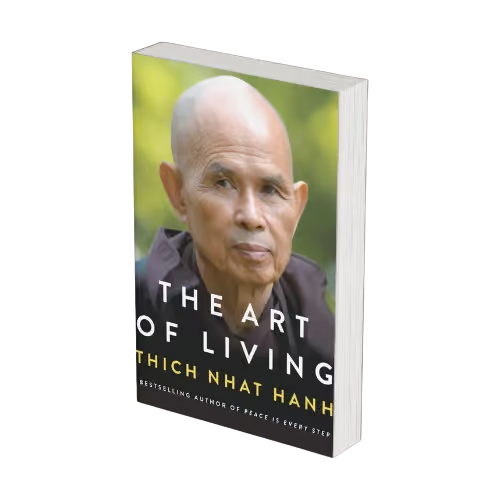
The Art of Living
by Thich Nhat Hanh
Thich Nhat Hanh, of Vietnam (1926–2022), was a Vietnamese Buddhist monk, teacher, peace activist, and pathfinder who has made mindfulness an important aspect of modern life. A Zen teacher and poet, he authored more than 100 books on mindfulness, meditation and compassion. Exiled during the Vietnam War, he dedicated his life to peace, interfaith dialogue, and practical spirituality. His teachings merge classic Buddhist wisdom with down-to-earth lessons for everyday application. He was instrumental in helping millions develop inner peace, self-awareness and mindful living through his retreats all over the world and the Plum Village community. His approach is one of love, with presence and connection.
Thich Nhat Hanh describes how to lead a meaningful life in The Art of Living by practicing mindfulness and staying in the present. He insists that one doesn’t live to attain an external goal, but is filled to the limit with meaning and full with sense of the interconnectedness of all things.
Impermanence – The world always changes, embracing it is a liberty.
Non-Self – We are not individuals, but deeply connected to everything.
Interbeing — The only person knows nothing; we know nothing separate.
Mindfulness — Real happiness is being full on present.
Concentration – It is a direct line to Insight and a tranquil mind.
Insight – Seeing reality releases us from the suffering. We are freed from suffering.
Nirvana — Attachment and fear in order to see the truth of reality — We make room for actual peace, peace by letting go.
Thich Nhat Hanh shares some strategies that help you bring these principles to your everyday experiences. Whether it’s drinking tea, walking or even simply breathing, he says each moment has the potential to impart joy and awareness. He takes on death, also discussing how understanding the transient nature of experience makes us willing to face death in life. What is essentially, The Art of Living is a ground truth for spiritual rebirth and help them be able to serene in peace, in spirit and as a means to spiritual growth. Yet as the book reminds us, life is a simple and powerful experience (at least for ourselves) when we learn to slow down and listen. Thich Nhat Hanh has a way of condensing enormous wisdom into practical advice that anyone can use. It is gentle yet mighty writing, and encourages us to stop hurrying through life.
The thing about his message that stands out the most to me is impermanence. We refuse change altogether for fear of being lost and uncertain about the future, yet this book rebrands that as part of life, something natural and beautiful. When we realize that everything is temporary, we may have the courage to stop holding onto whatever we can’t control and realize that every moment is worth it. I also really like his idea of interbeing; that everything exists in a whole. It does not separate us from nature or to others or the past or the future. This way of seeing changes the whole framework, and particularly, relationships. It teaches us that our happiness is linked to happiness in the communities we live in, that kindness, mindfulness and compassionate action — all of which can be felt and not just acted on at home — are responsibilities.
You don’t need to meditate for several hours or go to a monastery. Any small thing — breathing, walking, eating — can be a mindfulness practice with total presence. Thich Nhat Hanh says enlightenment is never about reaching some mystical state, but instead living life as it is in the moment. That being said, doing this kind of thing is a routine. It’s easy to get overwhelmed with stress, distractions and overthinking. But every time I use these teachings to ground myself, whether through mindful breathing or a quiet watching of what I am thinking without judgment. In a nutshell, The Art of Living is a book I think everyone should read at least once. It doesn’t just prescribe ideas, it offers a roadmap for living with more peace, clarity and love. It’s wisdom that, applied, transforms how we experience life entirely. I suggest that clients and colleagues include elements of the teachings from “The Art of Living.”
Therapist, coach and anyone looking for more peace in my book – there are the essential conclusions.
Don’t wait longer: Just turn what you are doing into something new, and you will be able to find ways to deal with it. For others, acceptance comes second place. Fear not change: Instead of being afraid of the change, see it as a natural part of life.
Embrace our interconnectedness: What you do, how you think about and feel influence other people more than you can feel that it is your own power.
Break away from attachment: Attachment to people, results, or physical possessions results in misery. Learn to appreciate, without needing to own or command. Breathe purposefully: One single conscious breath gives instant calm and clarity.
Take pleasure in little things: Happiness isn’t in the future, happiness is in enjoying the present.
Notice your thoughts without getting caught up in them: You are not your thoughts; you are that part of your mind, which gives you something from which to learn.
Come to death with wisdom not fear: Knowing fleetingness gives us wings to live more fully and to love more deeply.
Live with intention: Rather than operate on autopilot through life, you can choose how you show up one day at a time. By following these rules and following these tenets, one learns to live a peaceful, purposeful and deeply satisfying life.
In Summary.
The Art of Living by Thich Nhat Hanh is a beautifully written guide for living with more mindfulness, peace and purpose. With simple but profound insights, he writes that happiness comes from being present, from accepting the impermanence of life. But this book is not merely about spirituality. It’s learning to seize each day with clarity and joy. If you want a book to slow down, feel peace and really live this book is it!
The Art of Living
by Thich Nhat Hanh
Thich Nhat Hanh, of Vietnam (1926–2022), was a Vietnamese Buddhist monk, teacher, peace activist, and pathfinder who has made mindfulness an important aspect of modern life. A Zen teacher and poet, he authored more than 100 books on mindfulness, meditation and compassion. Exiled during the Vietnam War, he dedicated his life to peace, interfaith dialogue, and practical spirituality. His teachings merge classic Buddhist wisdom with down-to-earth lessons for everyday application. He was instrumental in helping millions develop inner peace, self-awareness and mindful living through his retreats all over the world and the Plum Village community. His approach is one of love, with presence and connection.
Thich Nhat Hanh describes how to lead a meaningful life in The Art of Living by practicing mindfulness and staying in the present. He insists that one doesn’t live to attain an external goal, but is filled to the limit with meaning and full with sense of the interconnectedness of all things.
Impermanence – The world always changes, embracing it is a liberty.
Non-Self – We are not individuals, but deeply connected to everything.
Interbeing — The only person knows nothing; we know nothing separate.
Mindfulness — Real happiness is being full on present.
Concentration – It is a direct line to Insight and a tranquil mind.
Insight – Seeing reality releases us from the suffering. We are freed from suffering.
Nirvana — Attachment and fear in order to see the truth of reality — We make room for actual peace, peace by letting go.
Thich Nhat Hanh shares some strategies that help you bring these principles to your everyday experiences. Whether it’s drinking tea, walking or even simply breathing, he says each moment has the potential to impart joy and awareness. He takes on death, also discussing how understanding the transient nature of experience makes us willing to face death in life. What is essentially, The Art of Living is a ground truth for spiritual rebirth and help them be able to serene in peace, in spirit and as a means to spiritual growth. Yet as the book reminds us, life is a simple and powerful experience (at least for ourselves) when we learn to slow down and listen. Thich Nhat Hanh has a way of condensing enormous wisdom into practical advice that anyone can use. It is gentle yet mighty writing, and encourages us to stop hurrying through life.
The thing about his message that stands out the most to me is impermanence. We refuse change altogether for fear of being lost and uncertain about the future, yet this book rebrands that as part of life, something natural and beautiful. When we realize that everything is temporary, we may have the courage to stop holding onto whatever we can’t control and realize that every moment is worth it. I also really like his idea of interbeing; that everything exists in a whole. It does not separate us from nature or to others or the past or the future. This way of seeing changes the whole framework, and particularly, relationships. It teaches us that our happiness is linked to happiness in the communities we live in, that kindness, mindfulness and compassionate action — all of which can be felt and not just acted on at home — are responsibilities.
You don’t need to meditate for several hours or go to a monastery. Any small thing — breathing, walking, eating — can be a mindfulness practice with total presence. Thich Nhat Hanh says enlightenment is never about reaching some mystical state, but instead living life as it is in the moment. That being said, doing this kind of thing is a routine. It’s easy to get overwhelmed with stress, distractions and overthinking. But every time I use these teachings to ground myself, whether through mindful breathing or a quiet watching of what I am thinking without judgment. In a nutshell, The Art of Living is a book I think everyone should read at least once. It doesn’t just prescribe ideas, it offers a roadmap for living with more peace, clarity and love. It’s wisdom that, applied, transforms how we experience life entirely. I suggest that clients and colleagues include elements of the teachings from “The Art of Living.”
Therapist, coach and anyone looking for more peace in my book – there are the essential conclusions.
Don’t wait longer: Just turn what you are doing into something new, and you will be able to find ways to deal with it. For others, acceptance comes second place. Fear not change: Instead of being afraid of the change, see it as a natural part of life.
Embrace our interconnectedness: What you do, how you think about and feel influence other people more than you can feel that it is your own power.
Break away from attachment: Attachment to people, results, or physical possessions results in misery. Learn to appreciate, without needing to own or command. Breathe purposefully: One single conscious breath gives instant calm and clarity.
Take pleasure in little things: Happiness isn’t in the future, happiness is in enjoying the present.
Notice your thoughts without getting caught up in them: You are not your thoughts; you are that part of your mind, which gives you something from which to learn.
Come to death with wisdom not fear: Knowing fleetingness gives us wings to live more fully and to love more deeply.
Live with intention: Rather than operate on autopilot through life, you can choose how you show up one day at a time. By following these rules and following these tenets, one learns to live a peaceful, purposeful and deeply satisfying life.
In Summary.
The Art of Living by Thich Nhat Hanh is a beautifully written guide for living with more mindfulness, peace and purpose. With simple but profound insights, he writes that happiness comes from being present, from accepting the impermanence of life. But this book is not merely about spirituality. It’s learning to seize each day with clarity and joy. If you want a book to slow down, feel peace and really live this book is it!
“The greatest glory in living lies not in never falling, but in rising every time we fall.”
Recent Thoughts

Performance Lab Environment for Mental Clarity and Focus
High performers are seldom incompetent. They struggle with carryover. Carryover of stress. Carryover of emotion. Carryover of intensity from one room to another.

High Performance Without Burnout
When work is in the high performers’ way, it is very addictive. They are quick, decisive, disciplined, competitive and outcome-oriented. They raise standards.