
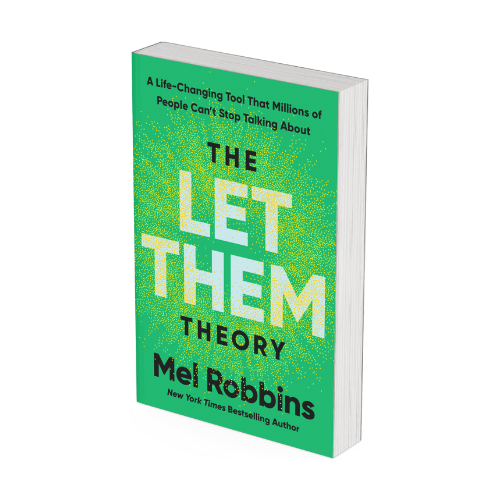
The Let Them Theory
by Mel Robbins
ne
Mel Robbins is a highly regarded motivational speaker and best-selling author and an ex-criminal defense attorney. She is best known for her no-nonsense and practical advice allowing people to take charge of their own lives without any need for pageantry or puffery.
Mel doesn’t complicate things. She talks like someone who has suffered real-life muck, and has something valuable to say about it. Her previous books, such as The 5 Second Rule, demonstrate the same underlying style: hardheaded, no-nonsense tips people can all use to effect meaningful change.
She also is known for her viral videos and popular podcast in which she takes you through the challenges in life in a very human and relatable way.
The Let Them Theory is Mel Robbins’ way of fighting one of the most exhausting habits we humans engage ourselves in: trying to get others to think, say or act one way or another. The title implies this as the main premise of the book. When people act in ways that annoy you, make you feel let down or make you feel left out or judged, let them.
Instead of falling into emotional drama or chasing validation or micromanaging relationships, Mel provides an entirely new viewpoint. Let people be who they are. If a party isn’t an invitation, let them. Then if they’re talking behind your back, let them. Let them if they don’t like or support what you have selected.
The book features real stories and examples of how much effort goes to waste trying to regulate what is not up to us to govern. Mel fills in the blanks between our people-pleasing tendencies and the anxiety or burnout so many of us experience. And she’s also showing that letting go of that control is liberation. And not only for other people, but for ourselves as well.
This is not about quitting or seclusion. It’s about acceptance and clarity. As you stop trying to force things or fix people, you learn to focus on your own values, on your own needs, on your own peace of mind. Just letting them do what they’re going to do allows you space to live your own life.
I’ll be honest. This is one of those books that’s frustrating at first, because it hits too close to home. We’ve all had those moments in life where we had the desire to argue, persuade someone, make an argument or win over someone. And Robbins meets our eyes directly and says: “Why? Let them.” And now it starts to feel like she’s telling us to be passive. But she’s not. She’s telling us to be free.
This is not a book for fans of drama or for anyone who’s OK with playing tug-of-war emotionally. It is for people who are tired of that noise. It was like a cold splash of water to me, the book. Slightly uncomfortable yet absolutely essential.
I liked how Robbins didn’t mince the painful truth that letting people go, that letting go of people, or being able to let go of people, is going to hurt sometimes. You’re going to mourn a few relationships. You’re going to realize how much energy you’ve been squandering trying to make people happy because they will never be happy. But in the end, this practice gives real peace. The kind of peace that happens just when you stop trying to manage people’s responses.
And because I’m currently working, from the ground up, with clients around relationships, boundaries and emotional health, I appreciated the immediate relevance of this theory. There is nothing new about “acceptance” as a concept, but Robbins manages to break through that noise and do an explanation for it that resonates. She’s not trying to be spiritual or dainty. She’s being real. And that’s what makes it land.
I also love how she links this mindset shift to better decision-making. Your choices will be clearer if you stop obsessing about what other people think. You know what you want. You know what your limits are. You quit betraying yourself just to be liked. That’s powerful stuff.
I Encourage Clients and Colleagues to Integrate The Teachings from The Let Them Theory and What They Will Gain
Here are the real-life advice I believe that therapy clients and therapists are to draw out of this book with you:
People will talk, judge, exclude or disagree with you. That’s their right. Let them.
You will never be able to please all people. Trying only exhausts you and waters down who you are.
Saying “let them” doesn’t mean you don’t care. It means you value your own peace and priorities more than approval.
When you let people show you who they are, rather than trying to mold them, the relationship becomes clear.
If someone doesn’t want to stay with you, or doesn’t agree with what you’re saying, let them. Holding on will just make things worse.
When you find yourself in the mood to fix, chase, prove something, say to yourself: “Let them.” It brings you back to center.
It’s a mature, grounded act. You’re deciding not to spend time on people and things that aren’t consistent with your values.
Demonstrate for them what calm, boundary-based living looks like by “letting them” do everything in your life. They’ll feel the difference.
In Summary
Mel Robbins’ The Let Them Theory contains a workable structure on emotional freedom. It speaks to us in that peace doesn’t come from controlling others. It comes from letting go. If you are ready to eliminate wasting energy on what you cannot change, then this book provides you with the shift in your mindset to make you more comfortable and less worried.
The Let Them Theory
by Mel Robbins
.
Mel Robbins is a highly regarded motivational speaker and best-selling author and an ex-criminal defense attorney. She is best known for her no-nonsense and practical advice allowing people to take charge of their own lives without any need for pageantry or puffery.
Mel doesn’t complicate things. She talks like someone who has suffered real-life muck, and has something valuable to say about it. Her previous books, such as The 5 Second Rule, demonstrate the same underlying style: hardheaded, no-nonsense tips people can all use to effect meaningful change.
She also is known for her viral videos and popular podcast in which she takes you through the challenges in life in a very human and relatable way.
The Let Them Theory is Mel Robbins’ way of fighting one of the most exhausting habits we humans engage ourselves in: trying to get others to think, say or act one way or another. The title implies this as the main premise of the book. When people act in ways that annoy you, make you feel let down or make you feel left out or judged, let them.
Instead of falling into emotional drama or chasing validation or micromanaging relationships, Mel provides an entirely new viewpoint. Let people be who they are. If a party isn’t an invitation, let them. Then if they’re talking behind your back, let them. Let them if they don’t like or support what you have selected.
The book features real stories and examples of how much effort goes to waste trying to regulate what is not up to us to govern. Mel fills in the blanks between our people-pleasing tendencies and the anxiety or burnout so many of us experience. And she’s also showing that letting go of that control is liberation. And not only for other people, but for ourselves as well.
This is not about quitting or seclusion. It’s about acceptance and clarity. As you stop trying to force things or fix people, you learn to focus on your own values, on your own needs, on your own peace of mind. Just letting them do what they’re going to do allows you space to live your own life.
I’ll be honest. This is one of those books that’s frustrating at first, because it hits too close to home. We’ve all had those moments in life where we had the desire to argue, persuade someone, make an argument or win over someone. And Robbins meets our eyes directly and says: “Why? Let them.” And now it starts to feel like she’s telling us to be passive. But she’s not. She’s telling us to be free.
This is not a book for fans of drama or for anyone who’s OK with playing tug-of-war emotionally. It is for people who are tired of that noise. It was like a cold splash of water to me, the book. Slightly uncomfortable yet absolutely essential.
I liked how Robbins didn’t mince the painful truth that letting people go, that letting go of people, or being able to let go of people, is going to hurt sometimes. You’re going to mourn a few relationships. You’re going to realize how much energy you’ve been squandering trying to make people happy because they will never be happy. But in the end, this practice gives real peace. The kind of peace that happens just when you stop trying to manage people’s responses.
And because I’m currently working, from the ground up, with clients around relationships, boundaries and emotional health, I appreciated the immediate relevance of this theory. There is nothing new about “acceptance” as a concept, but Robbins manages to break through that noise and do an explanation for it that resonates. She’s not trying to be spiritual or dainty. She’s being real. And that’s what makes it land.
I also love how she links this mindset shift to better decision-making. Your choices will be clearer if you stop obsessing about what other people think. You know what you want. You know what your limits are. You quit betraying yourself just to be liked. That’s powerful stuff.
I Encourage Clients and Colleagues to Integrate The Teachings from The Let Them Theory and What They Will Gain
Here are the real-life advice I believe that therapy clients and therapists are to draw out of this book with you:
People will talk, judge, exclude or disagree with you. That’s their right. Let them.
You will never be able to please all people. Trying only exhausts you and waters down who you are.
Saying “let them” doesn’t mean you don’t care. It means you value your own peace and priorities more than approval.
When you let people show you who they are, rather than trying to mold them, the relationship becomes clear.
If someone doesn’t want to stay with you, or doesn’t agree with what you’re saying, let them. Holding on will just make things worse.
When you find yourself in the mood to fix, chase, prove something, say to yourself: “Let them.” It brings you back to center.
It’s a mature, grounded act. You’re deciding not to spend time on people and things that aren’t consistent with your values.
Demonstrate for them what calm, boundary-based living looks like by “letting them” do everything in your life. They’ll feel the difference.
In Summary
Mel Robbins’ The Let Them Theory contains a workable structure on emotional freedom. It speaks to us in that peace doesn’t come from controlling others. It comes from letting go. If you are ready to eliminate wasting energy on what you cannot change, then this book provides you with the shift in your mindset to make you more comfortable and less worried.
“In the middle of difficulty lies opportunity.”
Recent Thoughts

Performance Lab Environment for Mental Clarity and Focus
High performers are seldom incompetent. They struggle with carryover. Carryover of stress. Carryover of emotion. Carryover of intensity from one room to another.

High Performance Without Burnout
When work is in the high performers’ way, it is very addictive. They are quick, decisive, disciplined, competitive and outcome-oriented. They raise standards.