
7 Mindsets for Success, Happiness, and Fulfilment
by Swami Mukundananda.
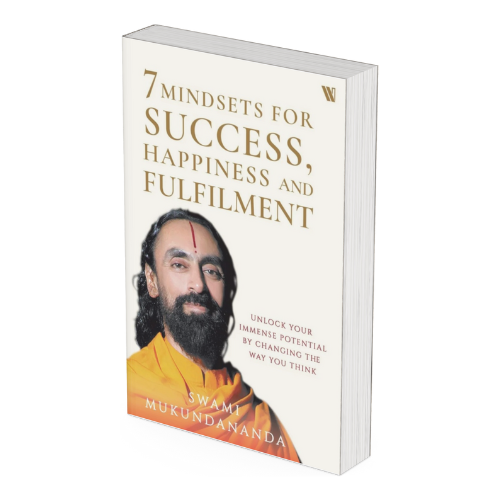
Swami Mukundananda is a spiritual teacher, author, and international authority on mind management. He had earned a degree in engineering from IIT Delhi and an MBA from IIM Calcutta but opted for spirituality in which he attended studies by Jagadguru Shree Kripaluji Maharaj on scriptures from the Vedas. Swami Mukundananda has spent nearly 40 years teaching and spreading spiritual wisdom globally. And his strategy to reconcile ancient Indian Vedic principles with modern scientific knowledge is in no way the least challenging to both a profound, and practical, interpretation. Between his books and a life-changing program, his wryly applicable lectures reach millions around the world.
This book offers a complete model for living a more balanced and fulfilling life by adopting seven transformative mindsets. These are big-picture thinking, positive attitude, strengthening willpower, breaking boundaries, living purposefully, practicing compassion, and staying humble.
My take on 7 Mindsets for Success, Happiness, and Fulfilment. Takeaways from visionary thinking.
-
Lessons in Visionary Thinking
One of the most important lessons is the value of thinking large. Mukundananda’s emphasis on setting lofty goals aligns perfectly with my belief in the power of visionary thinking. As a psychotherapist and educator, I’ve seen personally how expansive thinking can promote personal and professional development. Encouraging clients to dream big and move outside of their comfort zones is something I’ve always done, and this book underscores its importance.
-
Power of a Positive Attitude Mukundananda’s emphasis on maintaining a happy attitude is another key message.
In my profession, I frequently see people suffering from negative thought habits that impede their progress. The book’s lessons on fostering optimism and resilience are useful tools for conquering such obstacles. By incorporating these ideas into therapy sessions, I can help clients reframe their beliefs and develop a more resilient mindset, which is necessary for handling life’s problems.
-
Willingness and Discipline
The third mindset, developing willpower, perfectly aligns with the value I place on discipline and self-control. Mukundananda’s insights into creating a strong will are practical and effective, with strategies anyone may use. This is consistent with my approach to helping clients develop resilience and self-discipline, allowing them to attain their goals through constant effort and dedication.
-
Embracing discomfort
Mukundananda’s encouragement for pushing beyond one’s comfort zone is especially pertinent in today’s fast-paced world. The notion that true progress occurs outside our comfort zones is a compelling reminder of the advantages of embracing uncertainty and pain. This approach enables people to take measured chances and see problems as opportunities for progress.
-
Living With Purpose
Living with purpose is a theme that is firmly ingrained in my personal and professional attitude. Mukundananda’s teachings on aligning acts with a more profound sense of purpose offer a framework for long-term fulfilment. Explore one’s beliefs and passions, and then, aligning one’s goals with the inherent motivations. This method not only increases personal satisfaction but also promotes a sense of purpose and direction.
-
Compassion and Empathy
The book emphasises the importance of compassion in developing strong and meaningful relationships. This perspective emphasises the need for kindness and understanding in a society where empathy is frequently disregarded. As a therapist, instilling empathy and compassion helps clients create healthy interpersonal relationships and a supportive social network.
-
Humility and Continuous Learning
The fourth mindset, remaining modest, emphasises the value of humility and the goal of lifelong learning. Mukundananda’s advice to be open to new knowledge and experiences is critical for both personal and professional development. In my own journey, I attempt to embrace this approach by constantly seeking new opportunities to learn and grow. This book emphasises the need for humility and the continuous desire for self-improvement.
Using the principles from “7 Mindsets for Success, Happiness, and Fulfilment,” I urge clients and coworkers to:
- Set Ambitious Goals: Encourage expansive thinking and goal setting to maximise potential.
- Cultivate Optimism: Develop skills for maintaining a good attitude and resilience.
- Develop Discipline: Increase your willpower via persistent practice and self-control.
- Embrace Challenges: Encourage people to move outside their comfort zones for progress.
- Align with Purpose: Help people discover and live out their deeper sense of purpose.
- Practice Kindness: Encourage empathy and compassion in both personal and professional relationships.
- Maintain Humility: Encourage ongoing learning and humility as keys to long-term success.
Final Thoughts
Finally, Swami Mukundananda’s “7 Mindsets for Success, Happiness, and Fulfilment” provides insightful insights into the importance of thought in leading a happy life. His combination of old wisdom and modern science offers a complete approach to human transformation. As someone who is strongly committed to encouraging growth and resilience, Mukundananda’s teachings have inspired me, and I am excited to incorporate these ideas into my practice and daily life. This book is an excellent resource for anybody who wants to maximise their potential and live a successful, happy, and full life.
7 Mindsets for Success, Happiness, and Fulfilment
by Swami Mukundananda.
Swami Mukundananda is a spiritual teacher, author, and international authority on mind management. He had earned a degree in engineering from IIT Delhi and an MBA from IIM Calcutta but opted for spirituality in which he attended studies by Jagadguru Shree Kripaluji Maharaj on scriptures from the Vedas. Swami Mukundananda has spent nearly 40 years teaching and spreading spiritual wisdom globally. And his strategy to reconcile ancient Indian Vedic principles with modern scientific knowledge is in no way the least challenging to both a profound, and practical, interpretation. Between his books and a life-changing program, his wryly applicable lectures reach millions around the world.
This book offers a complete model for living a more balanced and fulfilling life by adopting seven transformative mindsets. These are big-picture thinking, positive attitude, strengthening willpower, breaking boundaries, living purposefully, practicing compassion, and staying humble.
My take on 7 Mindsets for Success, Happiness, and Fulfilment. Takeaways from visionary thinking.
-
Lessons in Visionary Thinking
One of the most important lessons is the value of thinking large. Mukundananda’s emphasis on setting lofty goals aligns perfectly with my belief in the power of visionary thinking. As a psychotherapist and educator, I’ve seen personally how expansive thinking can promote personal and professional development. Encouraging clients to dream big and move outside of their comfort zones is something I’ve always done, and this book underscores its importance.
-
Power of a Positive Attitude Mukundananda’s emphasis on maintaining a happy attitude is another key message.
In my profession, I frequently see people suffering from negative thought habits that impede their progress. The book’s lessons on fostering optimism and resilience are useful tools for conquering such obstacles. By incorporating these ideas into therapy sessions, I can help clients reframe their beliefs and develop a more resilient mindset, which is necessary for handling life’s problems.
-
Willingness and Discipline
The third mindset, developing willpower, perfectly aligns with the value I place on discipline and self-control. Mukundananda’s insights into creating a strong will are practical and effective, with strategies anyone may use. This is consistent with my approach to helping clients develop resilience and self-discipline, allowing them to attain their goals through constant effort and dedication.
-
Embracing discomfort
Mukundananda’s encouragement for pushing beyond one’s comfort zone is especially pertinent in today’s fast-paced world. The notion that true progress occurs outside our comfort zones is a compelling reminder of the advantages of embracing uncertainty and pain. This approach enables people to take measured chances and see problems as opportunities for progress.
-
Living With Purpose
Living with purpose is a theme that is firmly ingrained in my personal and professional attitude. Mukundananda’s teachings on aligning acts with a more profound sense of purpose offer a framework for long-term fulfilment. Explore one’s beliefs and passions, and then, aligning one’s goals with the inherent motivations. This method not only increases personal satisfaction but also promotes a sense of purpose and direction.
-
Compassion and Empathy
The book emphasises the importance of compassion in developing strong and meaningful relationships. This perspective emphasises the need for kindness and understanding in a society where empathy is frequently disregarded. As a therapist, instilling empathy and compassion helps clients create healthy interpersonal relationships and a supportive social network.
-
Humility and Continuous Learning
The fourth mindset, remaining modest, emphasises the value of humility and the goal of lifelong learning. Mukundananda’s advice to be open to new knowledge and experiences is critical for both personal and professional development. In my own journey, I attempt to embrace this approach by constantly seeking new opportunities to learn and grow. This book emphasises the need for humility and the continuous desire for self-improvement.
Using the principles from “7 Mindsets for Success, Happiness, and Fulfilment,” I urge clients and coworkers to:
- Set Ambitious Goals: Encourage expansive thinking and goal setting to maximise potential.
- Cultivate Optimism: Develop skills for maintaining a good attitude and resilience.
- Develop Discipline: Increase your willpower via persistent practice and self-control.
- Embrace Challenges: Encourage people to move outside their comfort zones for progress.
- Align with Purpose: Help people discover and live out their deeper sense of purpose.
- Practice Kindness: Encourage empathy and compassion in both personal and professional relationships.
- Maintain Humility: Encourage ongoing learning and humility as keys to long-term success.
Final Thoughts
Finally, Swami Mukundananda’s “7 Mindsets for Success, Happiness, and Fulfilment” provides insightful insights into the importance of thought in leading a happy life. His combination of old wisdom and modern science offers a complete approach to human transformation. As someone who is strongly committed to encouraging growth and resilience, Mukundananda’s teachings have inspired me, and I am excited to incorporate these ideas into my practice and daily life. This book is an excellent resource for anybody who wants to maximise their potential and live a successful, happy, and full life.
“In the middle of difficulty lies opportunity.”
Recent Thoughts

Performance Lab Environment for Mental Clarity and Focus
High performers are seldom incompetent. They struggle with carryover. Carryover of stress. Carryover of emotion. Carryover of intensity from one room to another.

High Performance Without Burnout
When work is in the high performers’ way, it is very addictive. They are quick, decisive, disciplined, competitive and outcome-oriented. They raise standards.