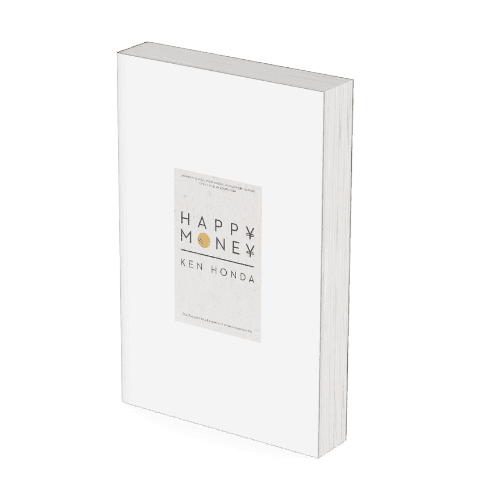
Happy Money by Ken Honda
The Author.
Ken Honda is often referred to as the “Zen Millionaire” in Japan, not just because he’s made a lot of money. He’s especially interested in how people feel about money, how they treat it, how it affects their lives, and the deep connection them to money. Ken does not have to do with budgets or investments, or spreadsheets or anything like that at all. He is very different from most financial sages. No, he’s all about mending up your money wounds. Money can bring joy, peace and freedom, but only if you deal with the fear, guilt, and stress you’ve attached to it. At present with over 8 million books sold in Japan, his down-to-earth style resonates for people who are tired of chasing after money and ready to go live a healthier life whether it involves financial or emotional peace.
Summary of “Happy Money”
Under the assumption that happiness makes money, Happy Money in the end is one simple and effective idea. Money is energy. And that energy can be both good and bad, depending on how we give and accept it. If we make it joyful and spend it grateful, it becomes happy money. If we earn it through stress or fear and pay it when required or guilty, it is unhappy money.
Ken Honda opens the book with a strong question someone asked him once, in the process: “Is your money happy or unhappy?” One question changed the way he perceived everything for all of time! He then realized that the vast majority of people were walking around with a rather heavy emotional baggage on their backs when it comes to their money: anxiety, shame, fear of not having enough, guilt about having too much.
This book is not about how to get rich. It’s all about how to be happy with money, no matter how much money you have. Ken tells stories about people from his own life and from clients and the culture of Japan, like “arigato your money”, meaning saying thank you as your money goes in and out. Gratitude is a practice, not simply a nice idea.
He also explains the wounds of money—things that we pick up from our families, cultures, or past experiences that impact the way we approach money. If it’s been “we can’t afford that” growing up or “money is the root of all evil,” those beliefs carry on, unless you consciously work through it.
The book also urges you to go from a scarcity mindset to a flow mindset. (A part of that is learned through conscious use of funds) and you never lose your mind to how you spend and save things, not just out of fear or avarice. The goal, it turns out, isn’t simply wealth; it’s liberation, faith and emotional transparency.
My opinions on ‘Happy Money’.
This book catches me off guard, and in a good way. I went in expecting the usual financial advice, maybe even a few mindset tricks. What I received was something deeper, more real, and, for the record, more useful.
Ken Honda doesn’t try to pump you up through money affirmations or sell you a dream life. He wants you to see your own account and stop suffering from that. And that, to me, is more important than chasing a second zero in your savings.
But not least of all, what struck me about that was the emotional angle. Most of us have a certain kind of money-tension. We’re fearing that we’ll never have enough or feeling guilty for wanting more. Some give too much, some hoard, some shun money because it’s too much. Ken says that’s all down to emotional patterns, and he’s right.
I’ve seen it in clients. People come in with stress about relationships, work, self-worth… and if we go deeper, money is usually the focus and money is the core. Not due to greed, but because money is synonymous with identity, safety, control and power. Happy Money unpacks all that, but without making you feel judged and dumb.
“Thank you” to your money when it arrives and leaves sounds soft, but not surprisingly it is grounding at the same time. It makes transactions moments of awareness. It makes you more conscious of how you are making money, spending it and giving. And it helps stop you operating from fear;
Also, I respect Ken doesn’t turn this into “rich vs poor” talk. He isn’t saying you should just give money away or don’t give a damn about being successful. He’s just asking, ‘What’s the energy behind your money?’ Are you moving higher with fear, or enjoying what you have in peace?
So if you’re a therapist, coach or just someone who gets people to take better attitudes or are more interested in emotional wellness, this book is gold. It allows you to reframe how money manifests in people’s lives and how healing their relationship with money can affect their entire sense of self.
I encourage clients & colleagues alike to integrate the lessons from “Happy Money”.
Make clients curious: Is your money happy or unhappy? Please let this become a passage into deeper emotional work.
Assist clients in mapping the money wounds, messages they heard while growing up that continue their own lives as they earn, spend or save.
Offer gratitude as a money practice: greet money with “thank you” when it comes in or leaves. Learn the emotional tendencies of overgiving, overspending and hoarding. It’s seldom just about the numbers.
Show the concept of “money flow” rather than money control. Move clients from a sense of scarcity to trust.
Help clients to move on from guilt to generosity, making giving and receiving feel joyous and not obligation, he suggests.
Help clients align money values with each other, rather than just sharing their bank accounts.
Don’t shy away from discussing money in sessions. It’s all too often an undercurrent of deeper issues. With colleagues: take stock of your money narratives. If you’re serving clients, do so with fear or trust?
Make the emotional aspect of money a component of the life of the group. Everybody has some baggage, so this openly helps release shame.
In summary.
Happy Money isn’t about getting rich—it’s about getting your money straight. Ken Honda takes it one step further and helps you not fight with your bank account but rather be more mindful of your money and treat it with heart and mind and soul. It’s emotional, practical and honestly one of the most useful money books I’ve read.
Happy Money by Ken Honda
The Author.
Ken Honda is often referred to as the “Zen Millionaire” in Japan, not just because he’s made a lot of money. He’s especially interested in how people feel about money, how they treat it, how it affects their lives, and the deep connection them to money. Ken does not have to do with budgets or investments, or spreadsheets or anything like that at all. He is very different from most financial sages. No, he’s all about mending up your money wounds. Money can bring joy, peace and freedom, but only if you deal with the fear, guilt, and stress you’ve attached to it. At present with over 8 million books sold in Japan, his down-to-earth style resonates for people who are tired of chasing after money and ready to go live a healthier life whether it involves financial or emotional peace.
Summary of “Happy Money”
Under the assumption that happiness makes money, Happy Money in the end is one simple and effective idea. Money is energy. And that energy can be both good and bad, depending on how we give and accept it. If we make it joyful and spend it grateful, it becomes happy money. If we earn it through stress or fear and pay it when required or guilty, it is unhappy money.
Ken Honda opens the book with a strong question someone asked him once, in the process: “Is your money happy or unhappy?” One question changed the way he perceived everything for all of time! He then realized that the vast majority of people were walking around with a rather heavy emotional baggage on their backs when it comes to their money: anxiety, shame, fear of not having enough, guilt about having too much.
This book is not about how to get rich. It’s all about how to be happy with money, no matter how much money you have. Ken tells stories about people from his own life and from clients and the culture of Japan, like “arigato your money”, meaning saying thank you as your money goes in and out. Gratitude is a practice, not simply a nice idea.
He also explains the wounds of money—things that we pick up from our families, cultures, or past experiences that impact the way we approach money. If it’s been “we can’t afford that” growing up or “money is the root of all evil,” those beliefs carry on, unless you consciously work through it.
The book also urges you to go from a scarcity mindset to a flow mindset. (A part of that is learned through conscious use of funds) and you never lose your mind to how you spend and save things, not just out of fear or avarice. The goal, it turns out, isn’t simply wealth; it’s liberation, faith and emotional transparency.
My opinions on ‘Happy Money’.
This book catches me off guard, and in a good way. I went in expecting the usual financial advice, maybe even a few mindset tricks. What I received was something deeper, more real, and, for the record, more useful.
Ken Honda doesn’t try to pump you up through money affirmations or sell you a dream life. He wants you to see your own account and stop suffering from that. And that, to me, is more important than chasing a second zero in your savings.
But not least of all, what struck me about that was the emotional angle. Most of us have a certain kind of money-tension. We’re fearing that we’ll never have enough or feeling guilty for wanting more. Some give too much, some hoard, some shun money because it’s too much. Ken says that’s all down to emotional patterns, and he’s right.
I’ve seen it in clients. People come in with stress about relationships, work, self-worth… and if we go deeper, money is usually the focus and money is the core. Not due to greed, but because money is synonymous with identity, safety, control and power. Happy Money unpacks all that, but without making you feel judged and dumb.
“Thank you” to your money when it arrives and leaves sounds soft, but not surprisingly it is grounding at the same time. It makes transactions moments of awareness. It makes you more conscious of how you are making money, spending it and giving. And it helps stop you operating from fear;
Also, I respect Ken doesn’t turn this into “rich vs poor” talk. He isn’t saying you should just give money away or don’t give a damn about being successful. He’s just asking, ‘What’s the energy behind your money?’ Are you moving higher with fear, or enjoying what you have in peace?
So if you’re a therapist, coach or just someone who gets people to take better attitudes or are more interested in emotional wellness, this book is gold. It allows you to reframe how money manifests in people’s lives and how healing their relationship with money can affect their entire sense of self.
I encourage clients & colleagues alike to integrate the lessons from “Happy Money”.
Make clients curious: Is your money happy or unhappy? Please let this become a passage into deeper emotional work.
Assist clients in mapping the money wounds, messages they heard while growing up that continue their own lives as they earn, spend or save.
Offer gratitude as a money practice: greet money with “thank you” when it comes in or leaves. Learn the emotional tendencies of overgiving, overspending and hoarding. It’s seldom just about the numbers.
Show the concept of “money flow” rather than money control. Move clients from a sense of scarcity to trust.
Help clients to move on from guilt to generosity, making giving and receiving feel joyous and not obligation, he suggests.
Help clients align money values with each other, rather than just sharing their bank accounts.
Don’t shy away from discussing money in sessions. It’s all too often an undercurrent of deeper issues. With colleagues: take stock of your money narratives. If you’re serving clients, do so with fear or trust?
Make the emotional aspect of money a component of the life of the group. Everybody has some baggage, so this openly helps release shame.
In summary.
Happy Money isn’t about getting rich—it’s about getting your money straight. Ken Honda takes it one step further and helps you not fight with your bank account but rather be more mindful of your money and treat it with heart and mind and soul. It’s emotional, practical and honestly one of the most useful money books I’ve read.
“Leadership is not about being in charge. It is about taking care of those in your charge.“
Recent Thoughts

Performance Lab Environment for Mental Clarity and Focus
High performers are seldom incompetent. They struggle with carryover. Carryover of stress. Carryover of emotion. Carryover of intensity from one room to another.

High Performance Without Burnout
When work is in the high performers’ way, it is very addictive. They are quick, decisive, disciplined, competitive and outcome-oriented. They raise standards.