
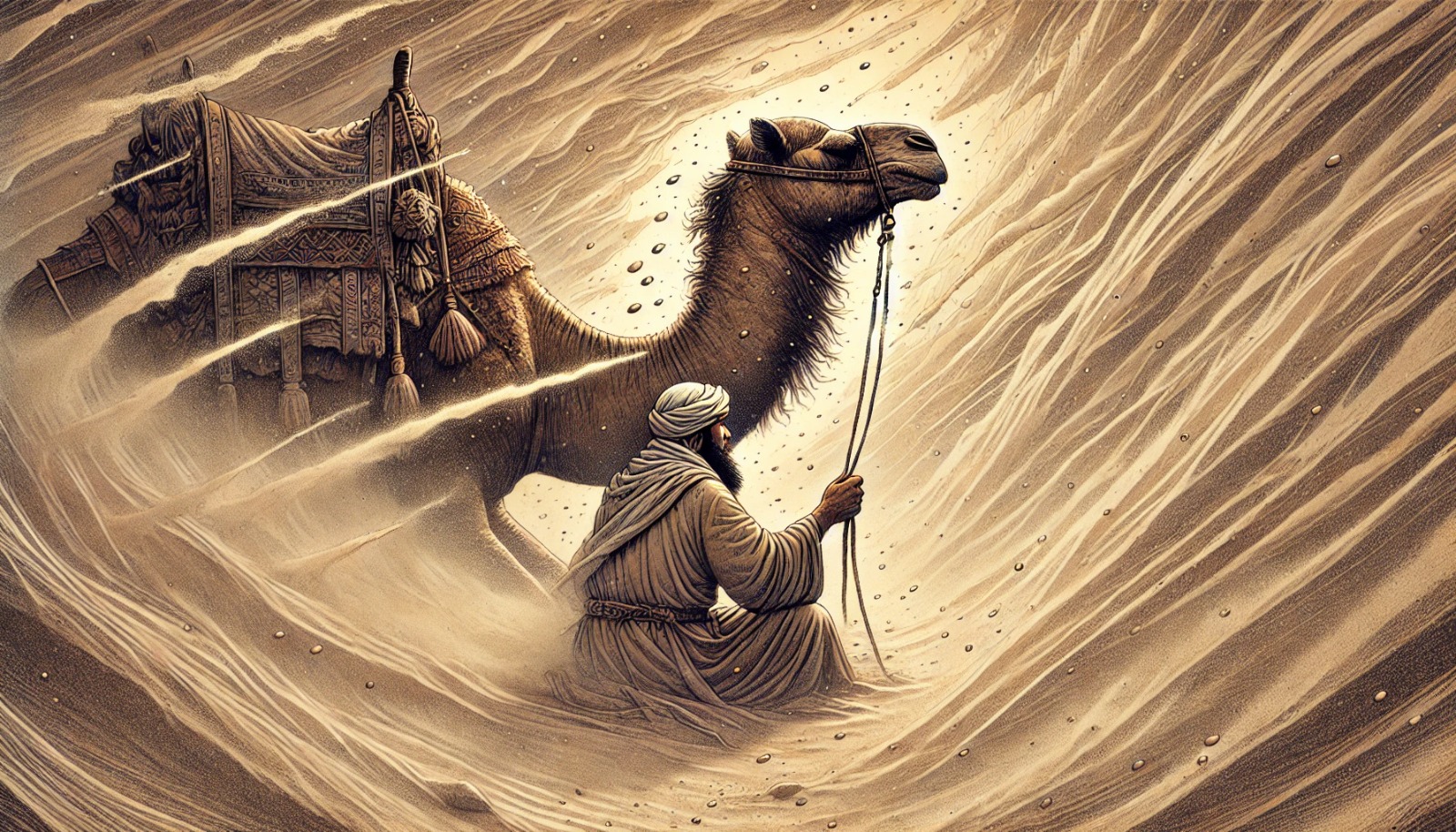
Once, a camel driver was caught in a desert sandstorm. Blinded and lost, he didn’t know where he was or if he’d survive. Instead of panicking, though, he covered himself — his camel himself — and waited out the storm. Upon it eventually passing he was back to panoramic sight, and navigated. He managed to become calm in dark times and always remembered that things would be just that.
Lessons
The account of the camel driver trapped in a desert sandstorm teaches important lessons on fortitude, patience, and endurance. Those are some of the key takeaways:
The Power of Wait: The camel driver choosing to sit still and wait the storm out rather than sprint it emphasises the importance of waiting. When faced with challenges, your initial response may at times be too fast and careless. But that narrative teaches us the hard way that sometimes the best thing to do is simply stop, look at things and let them evolve. By doing this, we can make better and more informed choices.
Allowing for Temporary Struggles: The sandstorm is a symbol of how easily life throws at you these temporary struggles. The camel driver learns to sit with that tempest, whether the tempest itself is of the physical world or some kind of symbol and not be swallowed whole by anxiety or frustration. Likewise, accepting that problems will end in the moment helps to lower stress and encourage a more grounded response.
Caging the Mind, Caring for the Soul: By wearing a cover around his camel and drawing energy, the camel driver keeps from wandering. This grounding makes him safe and preserves his vitality. In the same way that we don’t lose our footing through the storm and we don’t feel out of control, this reminds us that we too can choose to stay present. We trust these mechanisms and step away from ourselves too: if we can control no more than a sandstorm we are in, then we believe on trust in our processes. The camel driver does not bring any of this together or be able to influence the storm, only himself and his camel. “It tells us to focus not on what we cannot control but what we can,” he said, “and this is making us feel less anxious and having better confidence.
Resilience in Stillness — The camel driver is not a weatherman he is not a battle hero the camel driver is resilient in his stillness! This stillness is a reminder that resilience is more often a process of maintaining inner calm; it is more often than not the calmest, more often to stand idly by and wait, more so being poised to allow there is clarity than engage with action. This is the kind of mental fortitude that allows us to withstand life’s storms, without moving fast enough to be impacted with impulses.
Opinion and patience: Once the storm is out of control, the camel driver can see the horizon of what lies ahead and proceeds. So it’s not only the camel driver who makes the ride, but in many ways the camel driver’s ability to have all that perspective to follow his way becomes part of what he does here, not just a tool for avoiding confrontation. This shows patience and calmness lead to clarity and insight. Being able to wait out hard moments, instead of rushing, will lead to a clearer frame of mind so we can move forward confidently.
Hope and Faith through Catastrophe: In waiting a camel driver is to choose to protect himself and in consequence reflects their hope and faith that the storm is going to pass. We are reminded that hope, even in the most unpredictable of circumstances, is something we must hold on to, endure, and embrace regardless.
The camel driver’s response to the sandstorm teaches us lessons in perseverance, acceptance and inner peace. It’s a reminder that obstacles tend to be temporary, much like storms. Through patience, we can sort through them and reach a clearer vista.
Share this Blog
Recent Thoughts
Rumours, Noise and Real Growth: Learning to Keep My Eyes on the Road
Matthew is a closeted gay.” “Matthew jumps from woman to woman.” “He’s money-minded.” “I’ve heard he sees women for free if they ‘offer

Ikigai vs. Workaholism: Why I’ve Given Up Perfectionism and Workaholic Tendencies
1) Confronting Challenges. Throughout my career, I've always faced problems head-on. Being straightforward in tough situations is part of who I am. While