
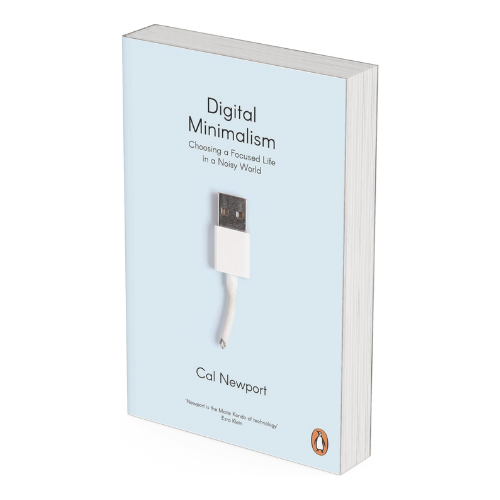
Digital Minimalism by Cal Newport
Digital Minimalism by Cal Newport Cal Newport is a well-known author, computer science professor at Georgetown University, and thought leader on the interface between digital technologies and culture. He is also known for his research on productivity, digital minimalism and deep work, and his Ph.D. from MIT. Newport has also written a wide range of best-selling books, including Deep Work and So Good They Can’t Ignore You. And now, he has also appeared in major publications like The New York Times and The Wall Street Journal. Choosing a Focused Life in a Noisy World supports the
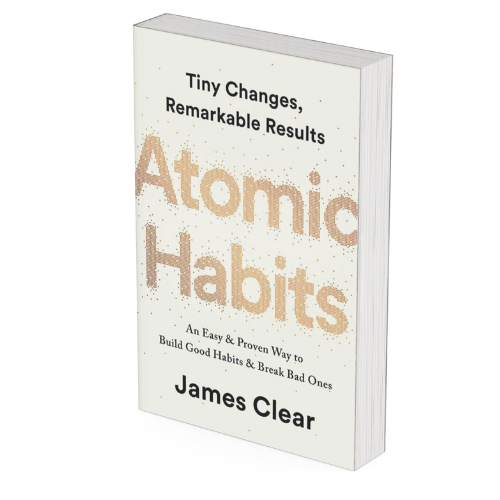
Atomic Habits by James Clear
Atomic Habits by James Clear James Clear is an award-winning author, lecturer and expert in habits, decision making and on-going development. Atomic Habits has been translated into more than 50 languages, and has sold more than 5 million copies around the world. Drawing upon science, Clear’s expertise helps people — and organisations — improve through humble, frequent tweaks. His opinions are in prominent magazines including The New York Times, Time and Entrepreneur, and he operates an equally well-read newsletter that runs to hundreds of thousands of people each week. This book offers a hands-on and detailed

Manager’s Morning Brew
Start your week with a breakfast meeting that is both purposeful and energising for HR professionals and supervisors. These events will provide a platform for discussion on issues critical for the success and leadership of an organisation. Below are ten themes to structure the discussions: 1. Developing Anti-Fragility and Resilience Investigate methods for cultivating an anti-fragile mindset and enhancing team resilience to enable the organisation to flourish in the face of adversity. 2. Leadership and Emotional Intelligence Examine the significance of emotional intelligence in the management of organisations, improving communication, and enhancing leadership effectiveness. 3. Diversity, Equity, and Inclusion

Self-Forgiveness: A Path to Personal Development and Recovery
Whenever we are not what we’re told is good enough for us, we’re often burdened by a lot of guilt and self-criticism for continually sinning. Forgiving yourself is one of the two great foundations of a good mind – so essential – and yet it’s usually neglected. While working as a psychotherapist and trainer, I have witnessed the life changing influence of self-forgiveness in the lives of both clients and myself. This blog discusses why self-forgiveness is so important, what difficulties there are, and some action steps I can follow to increase my self-compassion. There's so much good on

The Path to Genuine Resilience: Adopting Antifragility
My life and those around me have informed me that, in an ever-changing and ever-reactive world, being resilient is no longer enough. The old resilience, returning to the previous state after failing, has failed to meet today’s complex and unpredictable realities. A new responsibility for individuals is to actively cultivate an ability to go through struggle, rather than bounce back. But instead of adhering to a traditional version of stability, they must embrace adaptability and transformation as inherent components of survival. We need to try, instead, to reach antifragility, a term introduced by Nassim Nicholas Taleb in his book

Learning the Hard Way: Failures in my own personal sexuality and relationships
As my life and the lives of the people I work with have shown me, resilience is not an appropriate concept to fit the conditions of the world. The traditional notion of resilience — a return to a former condition following a setback — must facilitate people’s navigation of the complexities and ambiguities of modernity. Now, individuals need to deliberately cultivate the capacity to evolve through adversity, rather than simply rebound from it. Rather than clinging to a previous state of stability, they must embrace adaptability and transformation as indispensable survival mechanisms. Rather, we should work to be antifragile,

Rushed Decisions: The Downfall of Ignoring My Gut in Entrepreneurship
Entrepreneurship Gone Wrong: A Personal Introduction As an entrepreneur, I’ve had countless failures, many resulting from not following my instincts and making rushed judgements. Those missteps often came from pressure, urgency, or fear of missing out, rather than thoughtful consideration. They’ve tested my resilience, shaken my confidence, and forced me to confront uncomfortable truths about my decision-making. Yet these encounters have also shaped some of the most challenging and transformational periods of my professional career. Ignoring my gut feelings One of my most critical mistakes was not believing my gut instincts when they urged me to pause. Throughout my